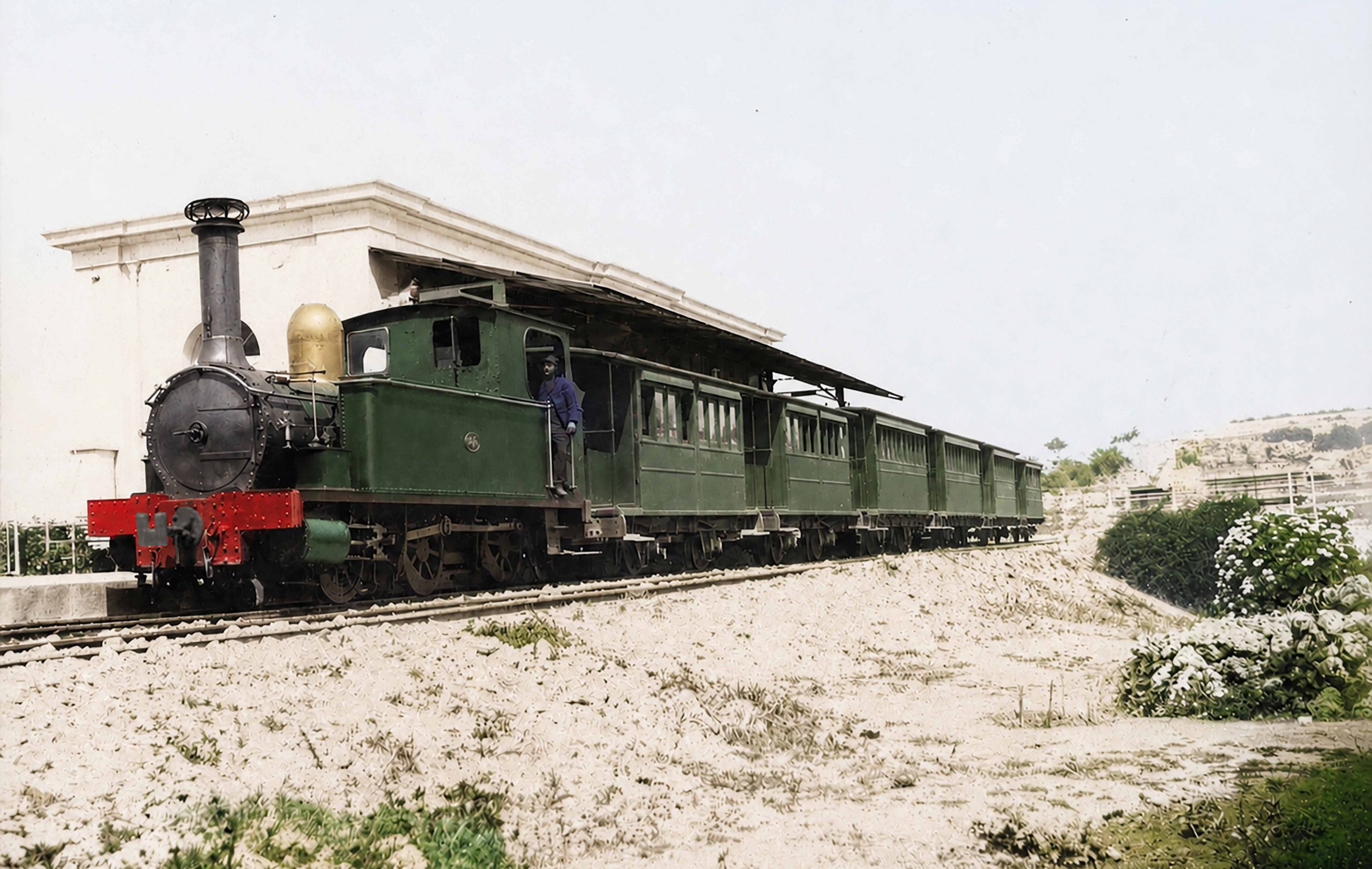
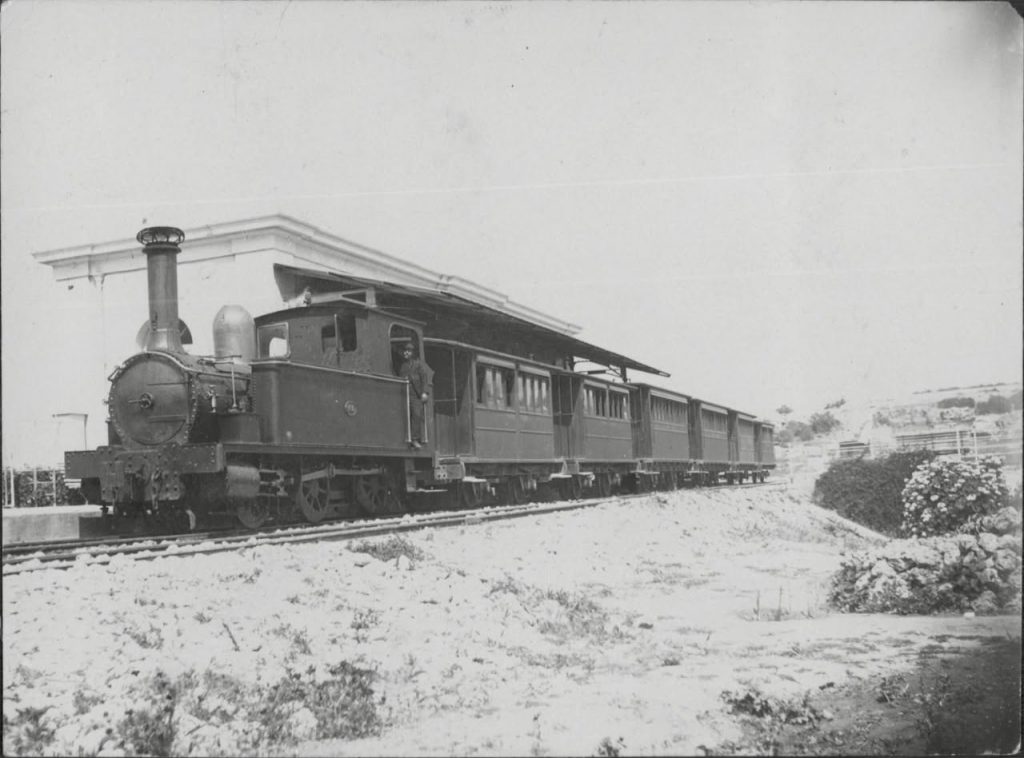
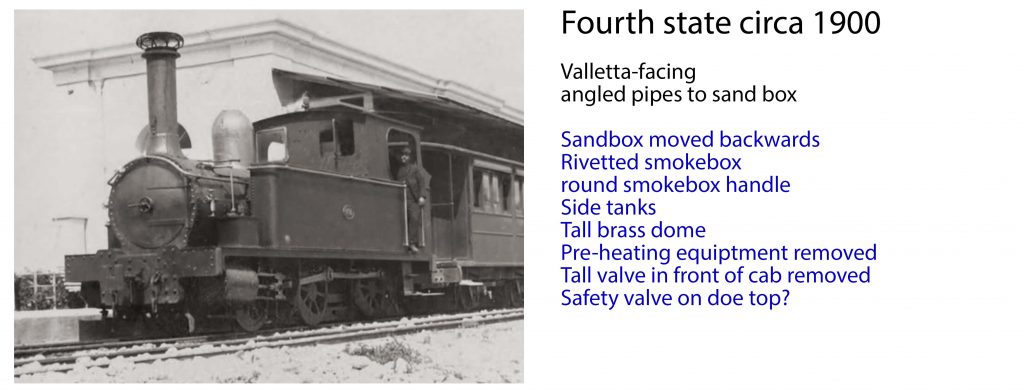
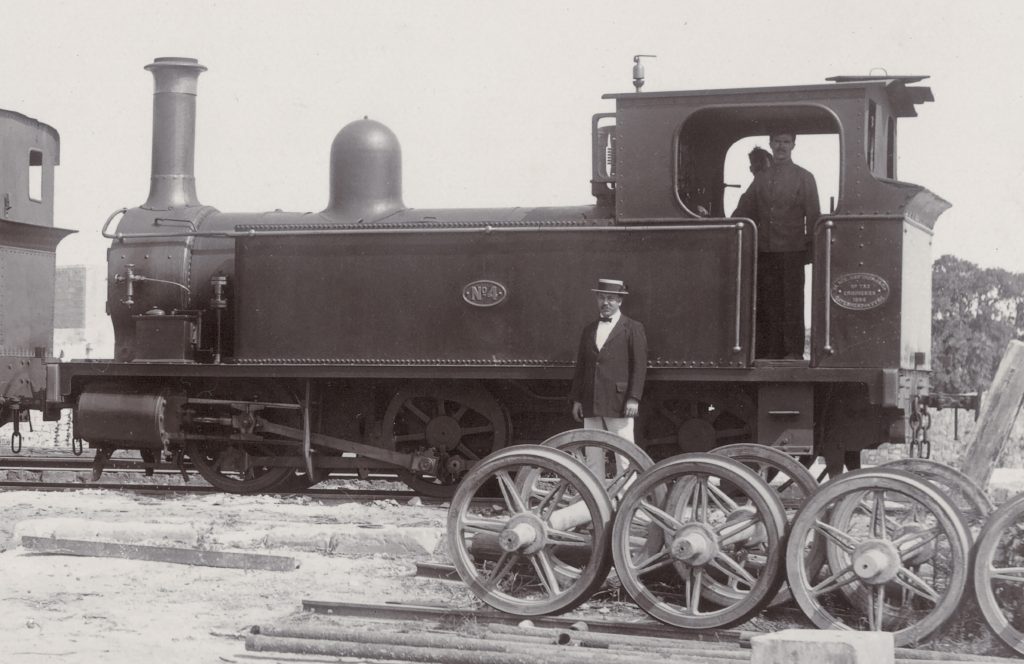
Something of a curve-ball for the history of the Malta Railway has appeared recently on the internet; a new historical photo has emerged of engine No.4 at Museum station in around 1900 (shown above in a colourised form). Close scrutiny of the details suggest it’s not Ai, but challenges all previously understood history of the locomotive.
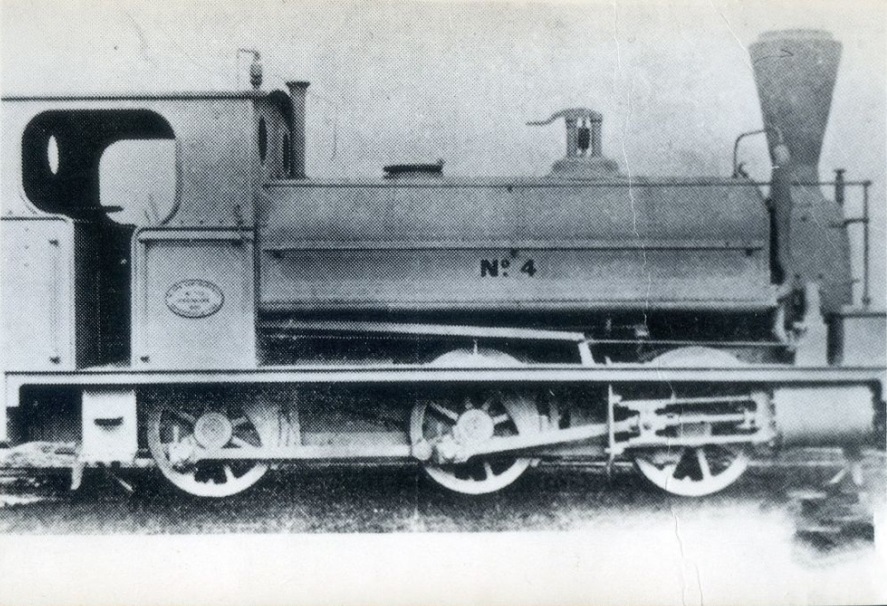
Before now it was thought that No.4 was unique amongst the motive power as the only engine ever to face Valletta, and that following a major reconstruction from saddle to side tanks it was changed to match the rest of the fleet. These two alterations were thought to have been undertaken concurrently.
The recently revealed photo contradicts that history, showing the engine in rebuilt condition AND facing Valletta. Naturally, this upsets the established timeline.
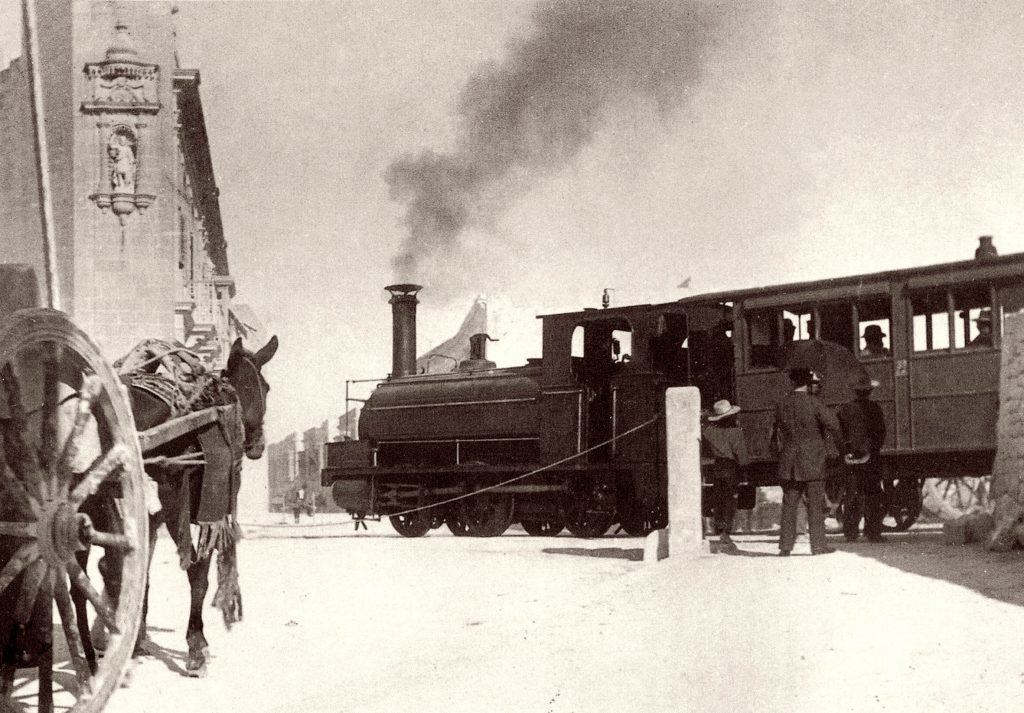
Making a study of as many available photos including the engine as possible, at least those with confirmed dates, there is a gap between 1892 and 1912. The new image appears to be the only verifiable depiction of No.4 in this period.
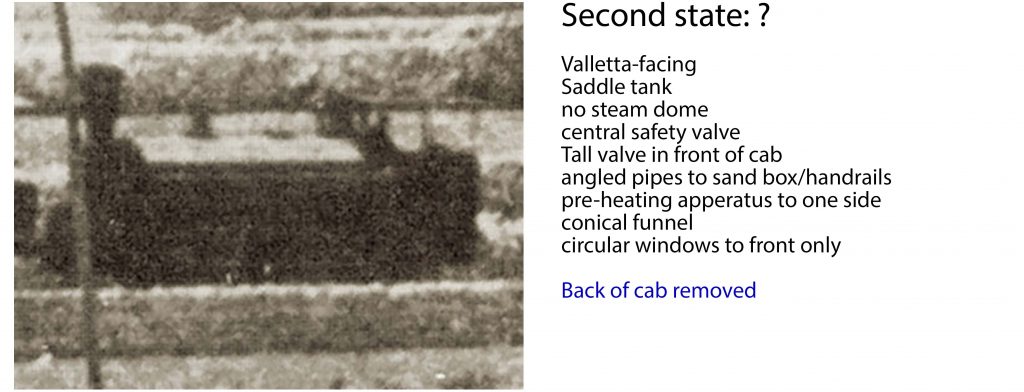
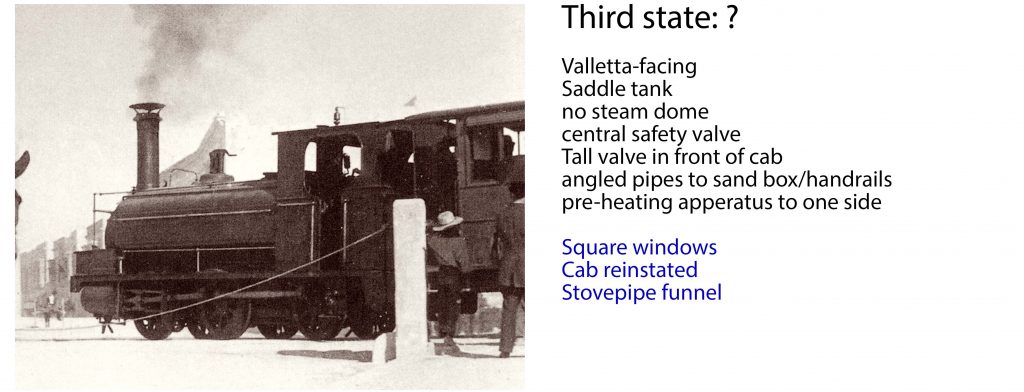
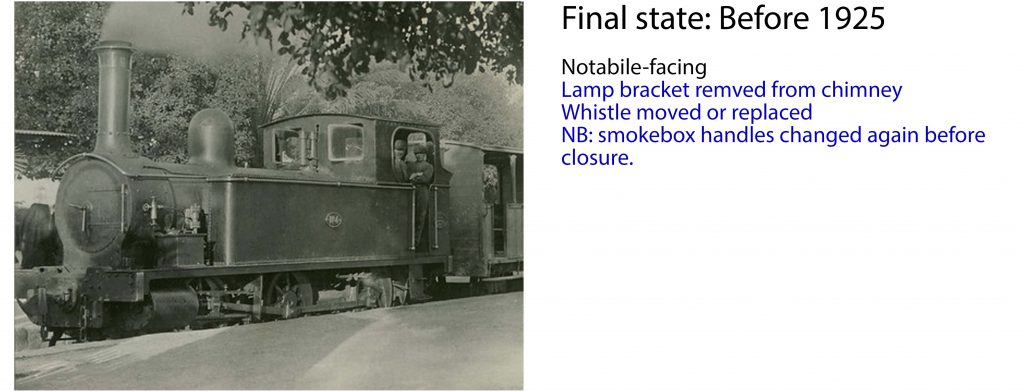
It appears then, that No4 went through a large number of changes over its lifetime. Scrutinising the available evidence there are a surprising six individual states identifiable. The new photo shows the engine facing Valletta still, but rebuilt. It shows a brass dome rather than the later painted iteration, and a riveted smokebox unknown in later images, though possibly the original.
Strangely, there is no indication of a safety valve, though one must have been fitted and potentially it remained in the original location, now integrated into the steam dome; this would explain the flat top suggested in the photo.
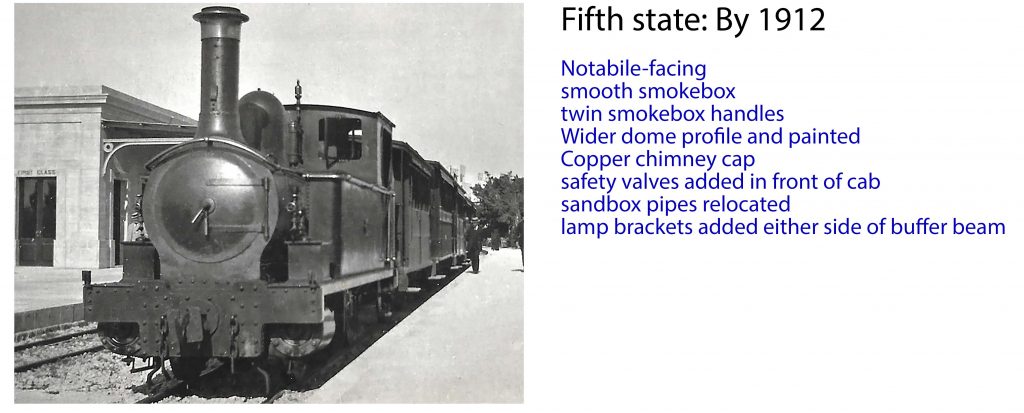
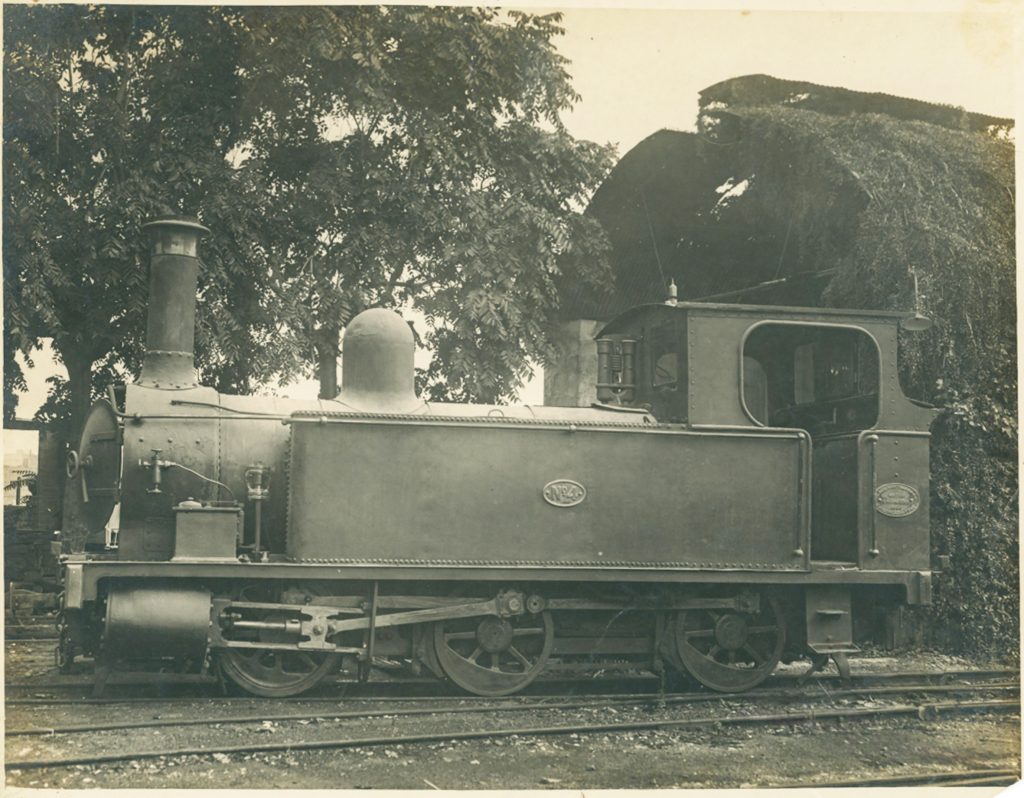
By 1912, the most significant change was the reversal of the locomotive to face Mdina, but there had been a number of other modifications. A new smokebox has been fitted, a copper chimney cap, a tall safety valve, relocated sand boxes, and a new steam dome casing.
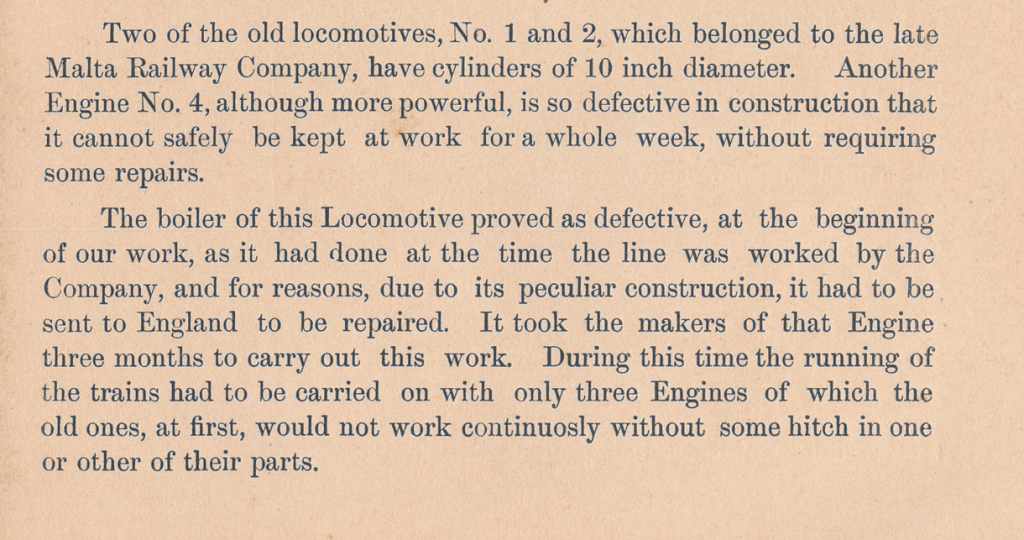
It’s relevant to consider what other evidence might support the evolution of the engine. There are a few documentary references that might assist; Railway manager Lorenzo Gatt penned a report to the Government covering the period 25th Feb 1892-24th Feb 1893: the first year of operation in state hands. In it he reports that the boiler of engine No.4, “due to its peculiar construction”… “had to be sent to England to be repaired. It took the makers of that Engine three months to carry out this work. During this time the running of the trains had to be carried on with only three Engines of which the old ones, at first, would not work continuously without some hitch in one or other of their parts.”
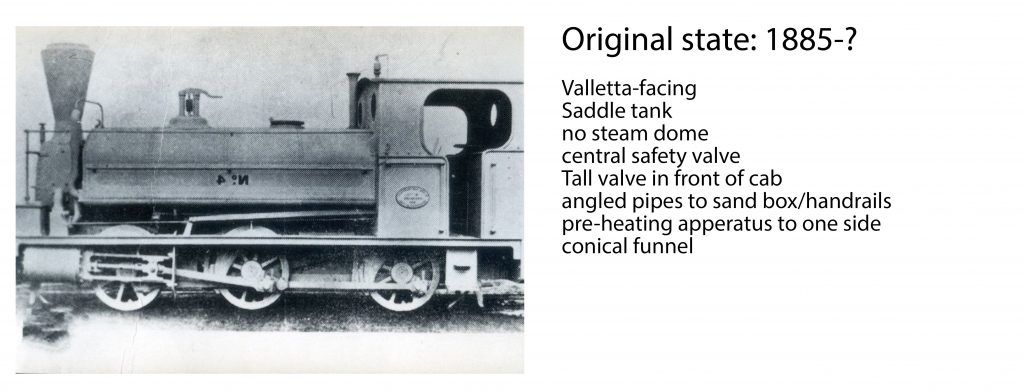
Here, then, is a first benchmark for works to the engine. There’s no indication of what works were undertaken to the boiler, but the return shipment was clearly inconvenient for the railway, and evidently when it arrived back it remained facing the same direction it always had.
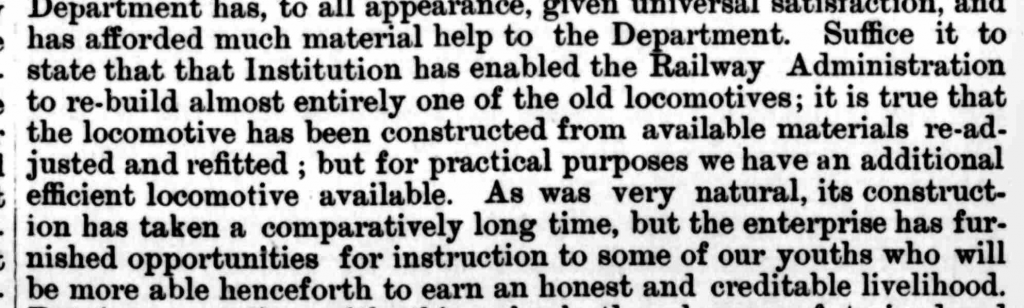
In 1897, the Island’s Chief Secretary, no less, reported on his financial statement including references to the railway. He noted that expansion of the engineering works at Hamrun had “enabled the Railway Administration to re-build almost entirely one of the old locomotives; it is true that the locomotive has been constructed from available materials re-adjusted and refitted; but for practical purposes we have an additional efficient locomotive available. As was very natural, its construction has taken a comparatively long time, but the enterprise has furnished opportunities for instruction to some of our youths who will be more able henceforth to earn an honest and creditable livelihood.”
This is widely regarded to refer to the reconstruction of No.4 and its transformation from saddle tank. It was traditionally thought that this was when the engine was turned to face Mdina, but this now appears to be incorrect.
If the new photo is correct, No.4 was still facing Valletta after the opening of the extension through to Mtarfa in 1900.
Although there is no specific reference to the turning of the engine, another documentary source provides a context in which this might have happened. Notes in the annual report for the railway state that No.4 was subject to an overhaul in the year 1907-8.
There is no other verified photographic evidence for the engine’s appearance between 1897 and 1912. In the latter year it was included as part of a series of photos commissioned by Nicola Buhagiar to supply to a British railway journal. By this time it had been turned. Other alterations had also been effected, possibly during the 1907-8 overhaul.
Of all the engines No. 4 has the most complex history, but one that saw it continually improved and returned to service. It proved to be one of the most adaptable, enduring, and regularly used engines in the railway’s history.
This post was updated 14.07.26 to include a further state, state 2, to the evolution.

No responses yet