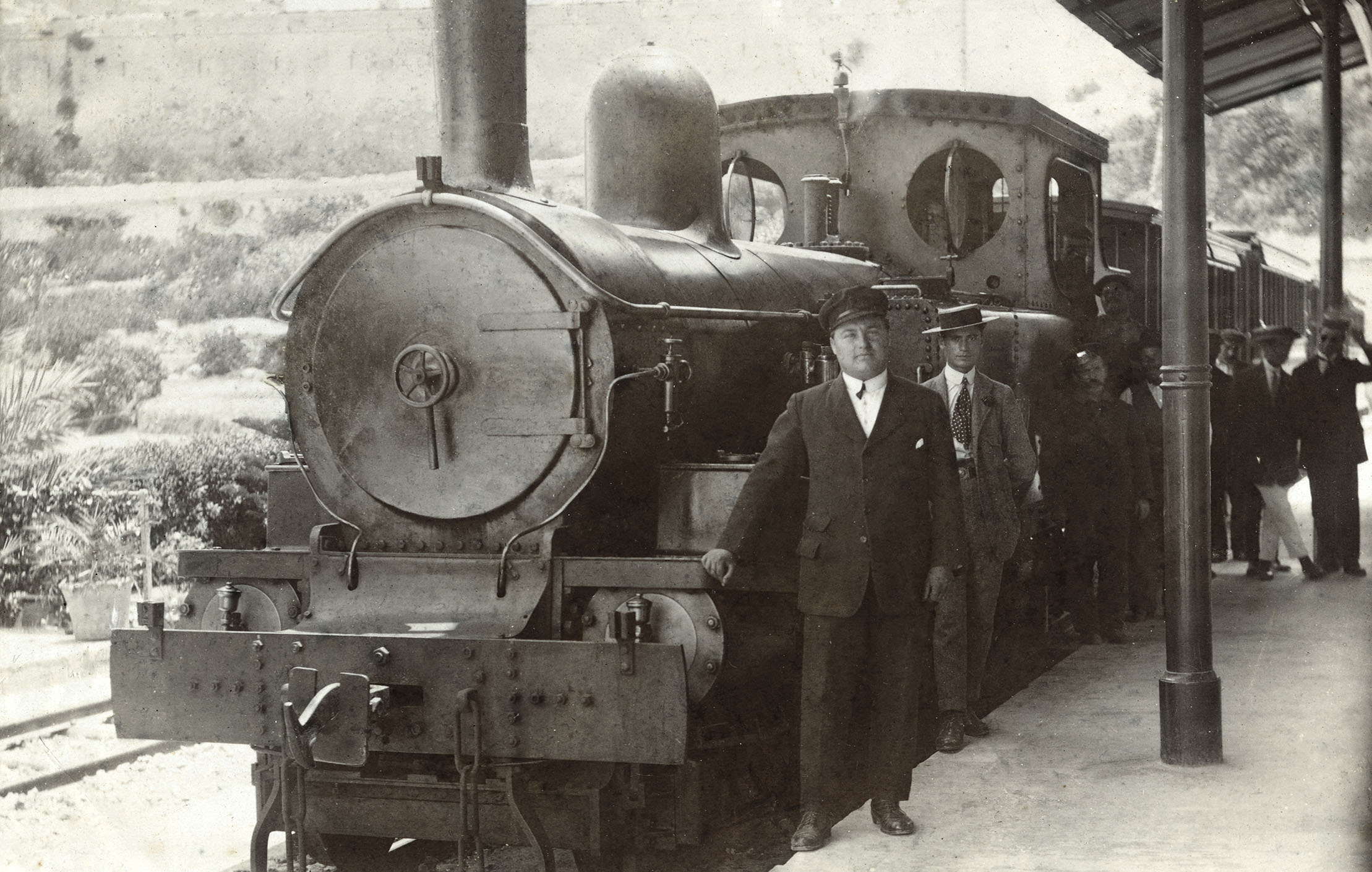
It’s been recorded, photographed several times, but is it more than it looks? It’s a tall rivetted cylinder at the back of the engineering works at Hamrun. Most analysis of it has identified it as a vertical boiler used as power or hot water for the works, or a storage tank; however, this new theory challenges that assumption and potentially vastly increases its importance as an historic relic of the Malta Railway.
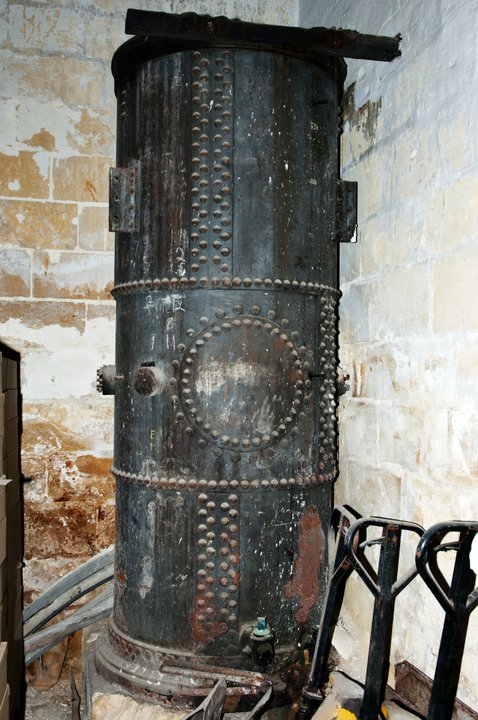
In a recent blog post we focused on why all engines on the railway faced in the same direction. Illustrating this we used one of the original manufacturer’s drawings of one of the four Beyer Peacock designed locomotives. Focussing again on this sectional drawing, a cutaway through the engine, it shows how all the components fitted together.
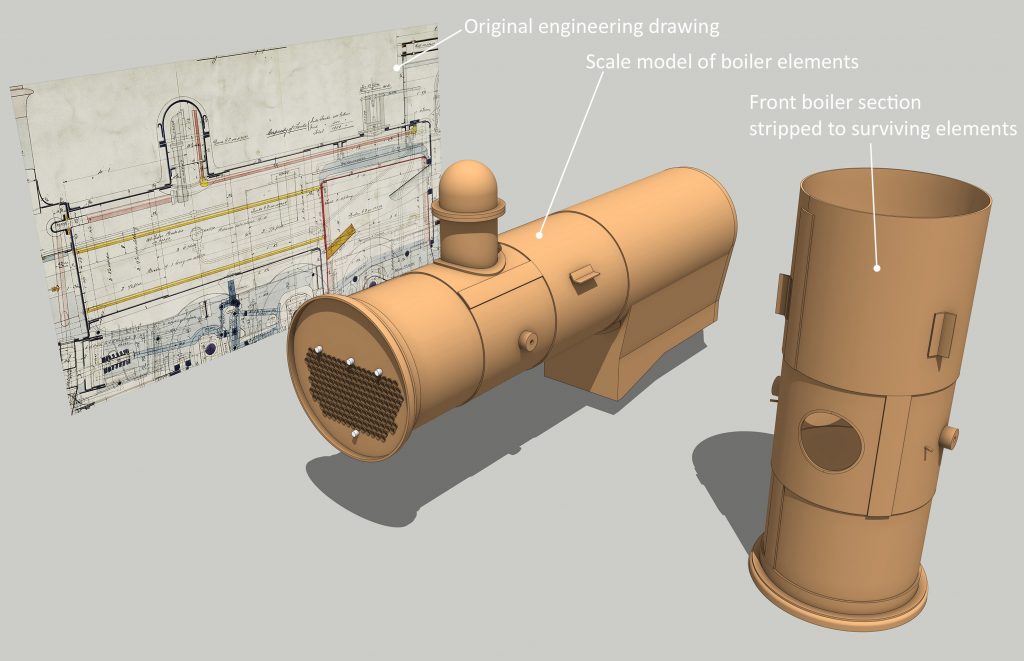
The drawing is colour-coded, red for copper, yellow for brass, brown for timber and shades of blue for ferrous metals, iron and steel. The horizontal form of the boiler is easily identified. This drawing shows how it was slightly conical in shape, being manufactured from several large barrel rings of graduating size that fitted over each other with a slight overlap, generally 2.5 inches.
However, none of these rings or the rivets that held them together are visible when you look at the outside of an engine; the whole is encased in a uniform cylindrical casing, partly for aesthetic purposes but also to form a cavity that could be packed solid with lagging to reduce heat loss and prevent the external surface temperature from causing injury.
Likewise, the elegantly shaped dome crowning the boiler was also aesthetic. The section drawing indicates the profile of the ironwork beneath, formed in sections connected by riveted or bolted flanges; this covers a hole through the boiler plates that accommodated the steam pipe.
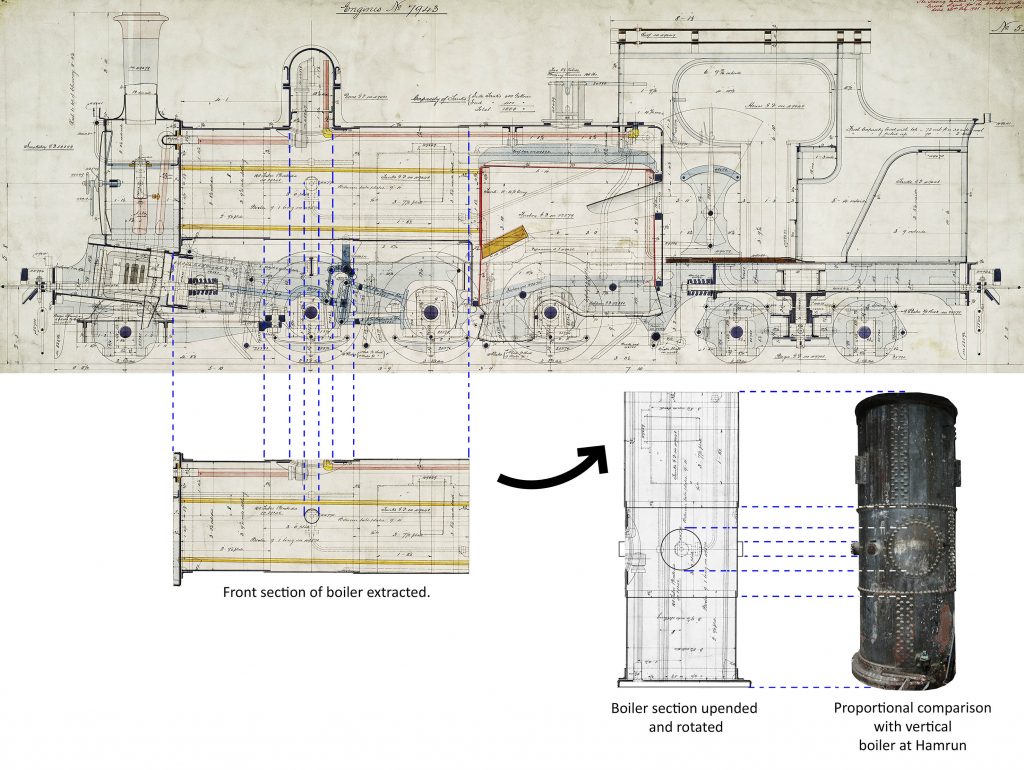
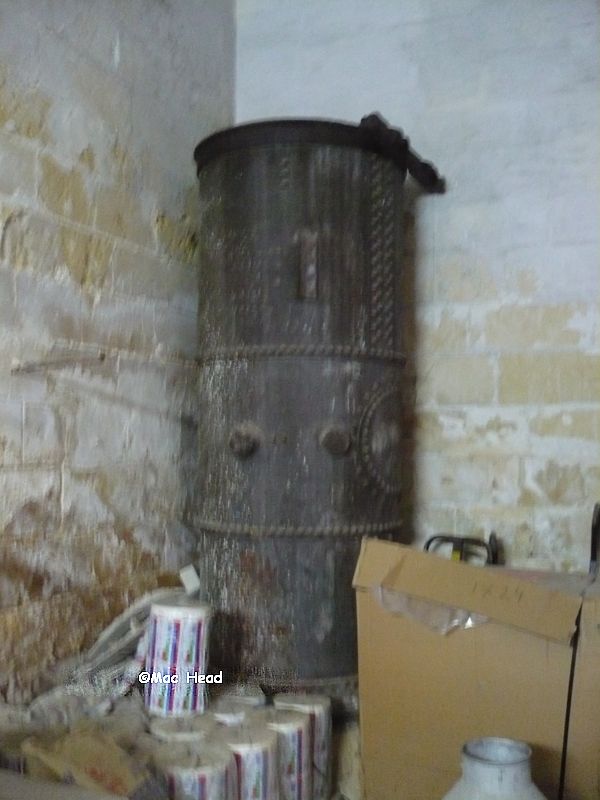
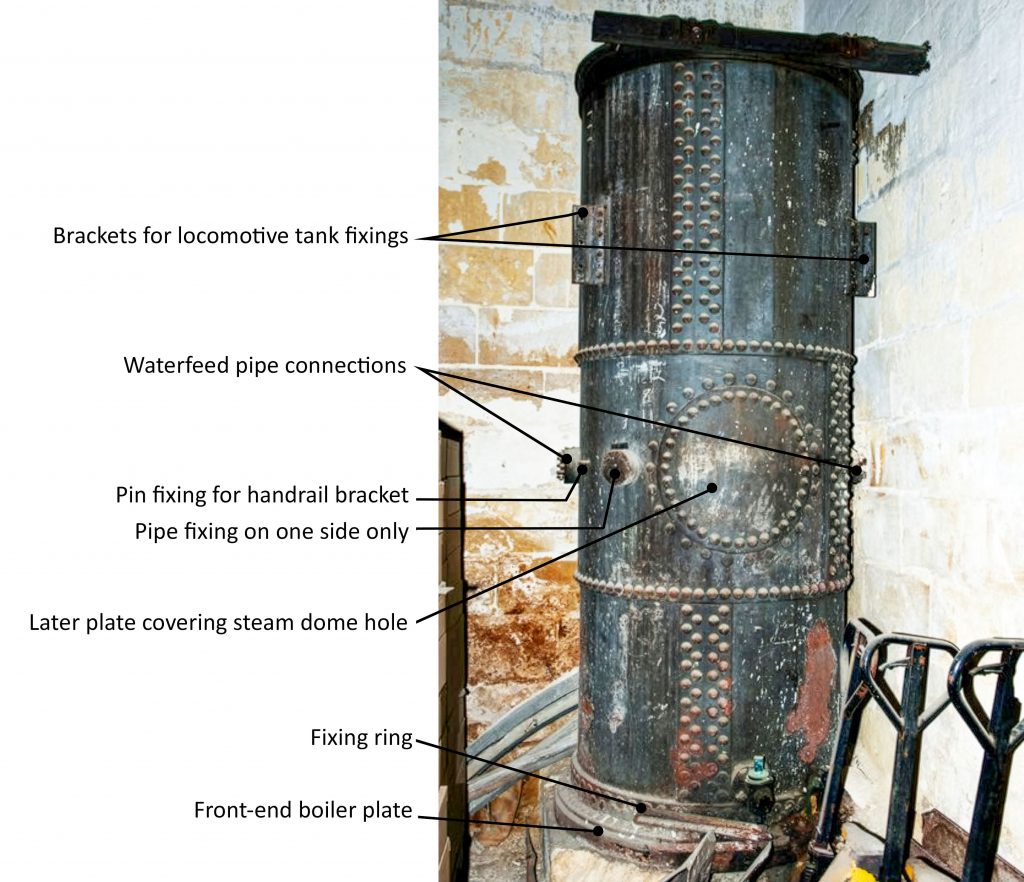
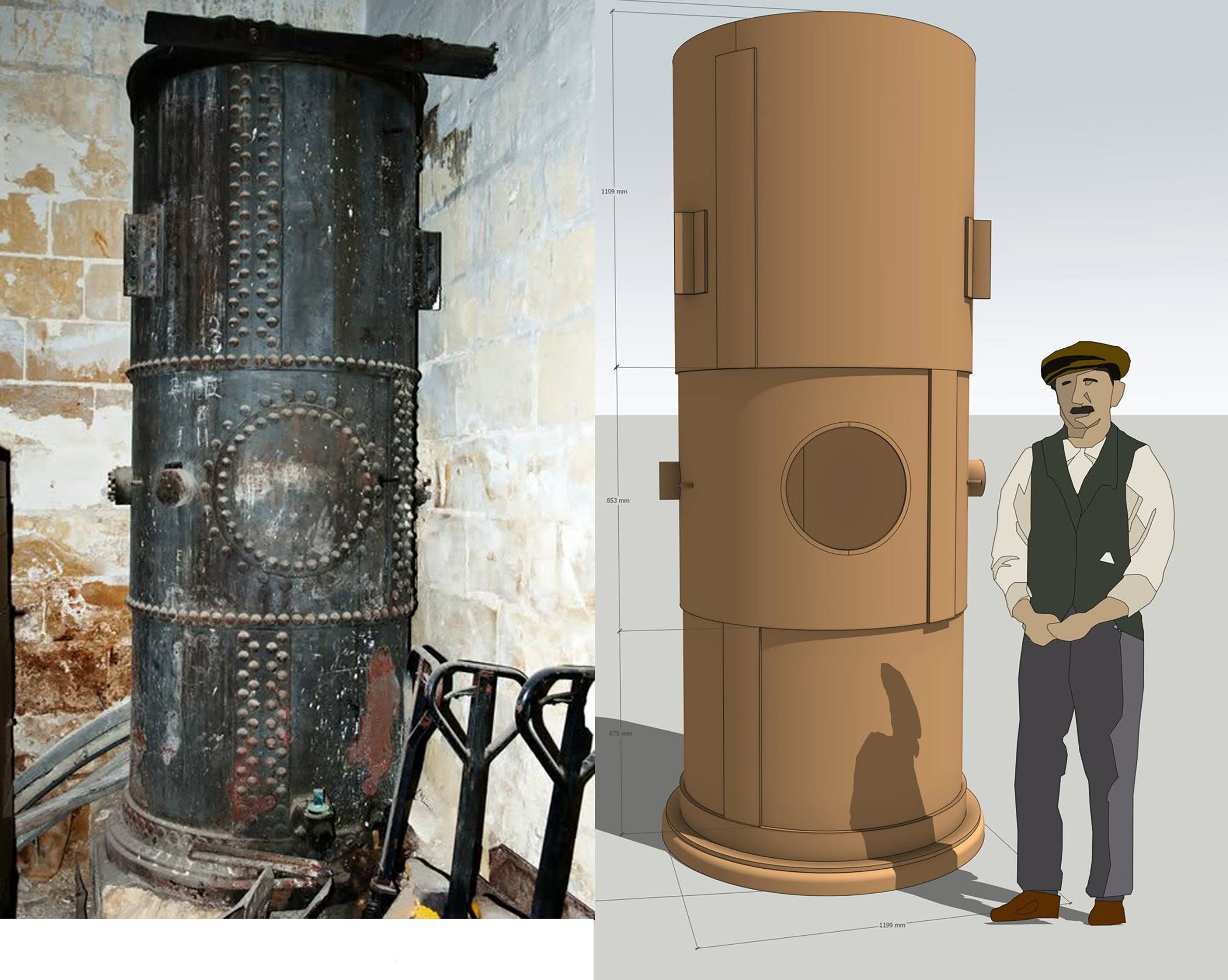
You’ll notice that the structure in Hamrun depot has some distinctive features in common. It too is formed from tapering rings riveted together, three of them. It also has a circular riveted plate with no other use other than to patch a circular hole beneath it.
You can probably already guess where this theory is heading, but further evidence needs to be considered before determining that this is one of the original locomotive boilers.
Notice the bottom of the vertical boiler in the depot and compare it to the profiles of the front-end boiler tube plate and the connecting ring fastening it to the first boiler ring in the drawing. They are very similar.
Proportionately, the first three rings of the locomotive boiler closely match the vertical example, a comparison made stronger by the locating of the steam dome centrally in the middle boiler ring; this would account for the circular patch.
Focussing on the front section of the locomotive’s boiler in the drawing and isolating it allows for more careful inspection. You’ll notice in the attached diagram above that a small circle is drawn in the centre of the extracted section. This was the connection for the feedwater pipe from the tanks into the boiler and there was one either side, serving each tank. These can be seen in historic photos just below the handrail fixing.
Taking things a stage further, rotating the section we’re interested in into an upright position, front-down, and swivelling it round 90 degrees so we can see the top, gives us an alternative view of the hole for the steam dome and the fixings on the side of the boiler. Comparing this to the surviving structure, the feedwater connections are obvious, one projecting either side, parallel with the patched steam dome hole.
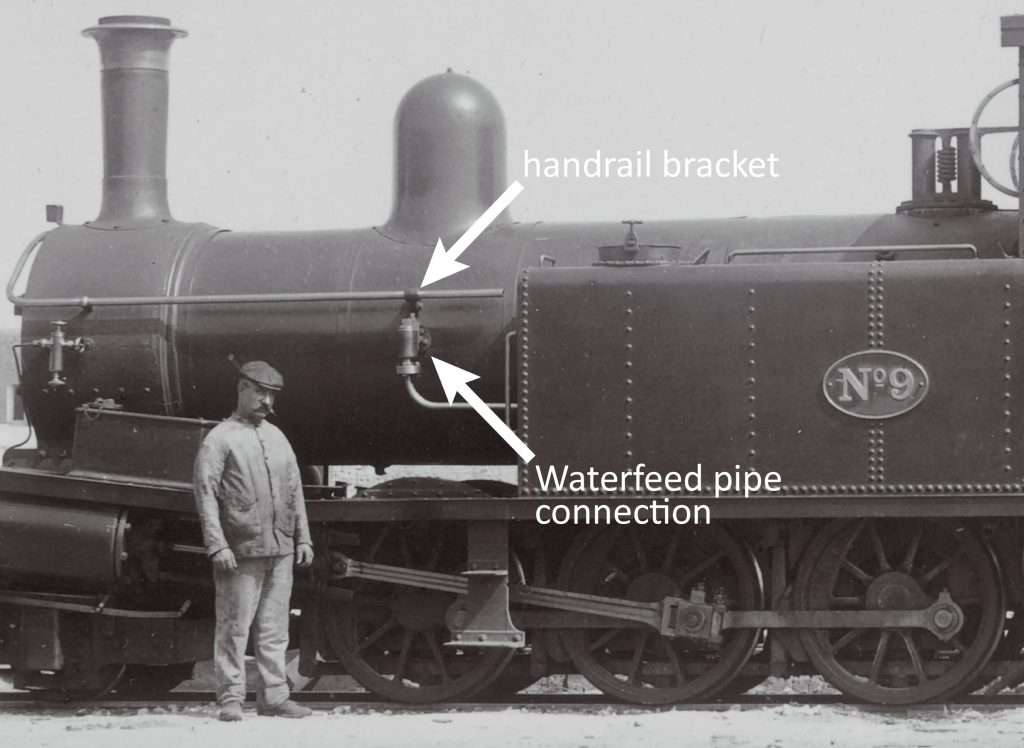
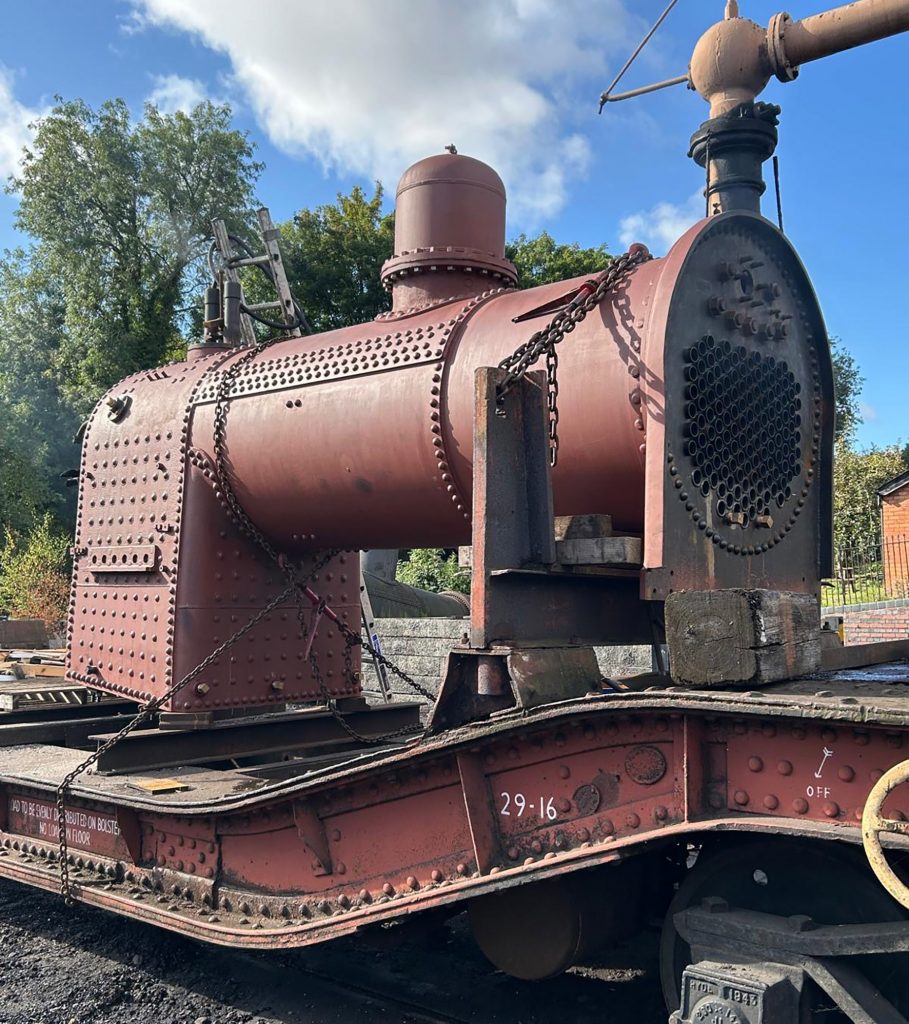
A careful look at the modern photo reveals other features. Also symmetrically positioned are two rectangular brackets attached to the uppermost ring; these are where the locomotive’s side tanks were secured. A metal pin projecting from the boiler side next to the feedwater connection corresponds with the bracket that once supported the handrail along the side of the boiler.
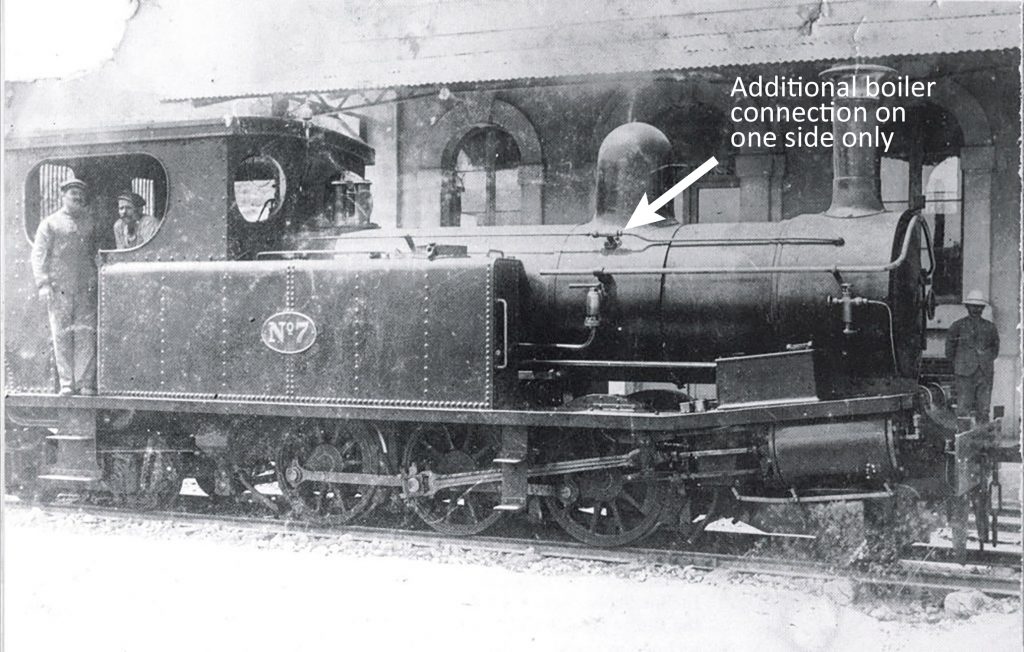
On one side of the surviving boiler, just near this pin, is another cylindrical feature. I had assumed this was something added later, as most photos of the Beyer Peacock engines have nothing showing in a corresponding location. However, other photos show something, but only when the engines are seen from one side. The mounting fixed a pipe from the boiler to the smokebox, delivering high pressure steam for the blower. This connection, therefore, is a unique signature that further supports the identification of the Hamrun boiler as being the principal section of one of these locomotives.
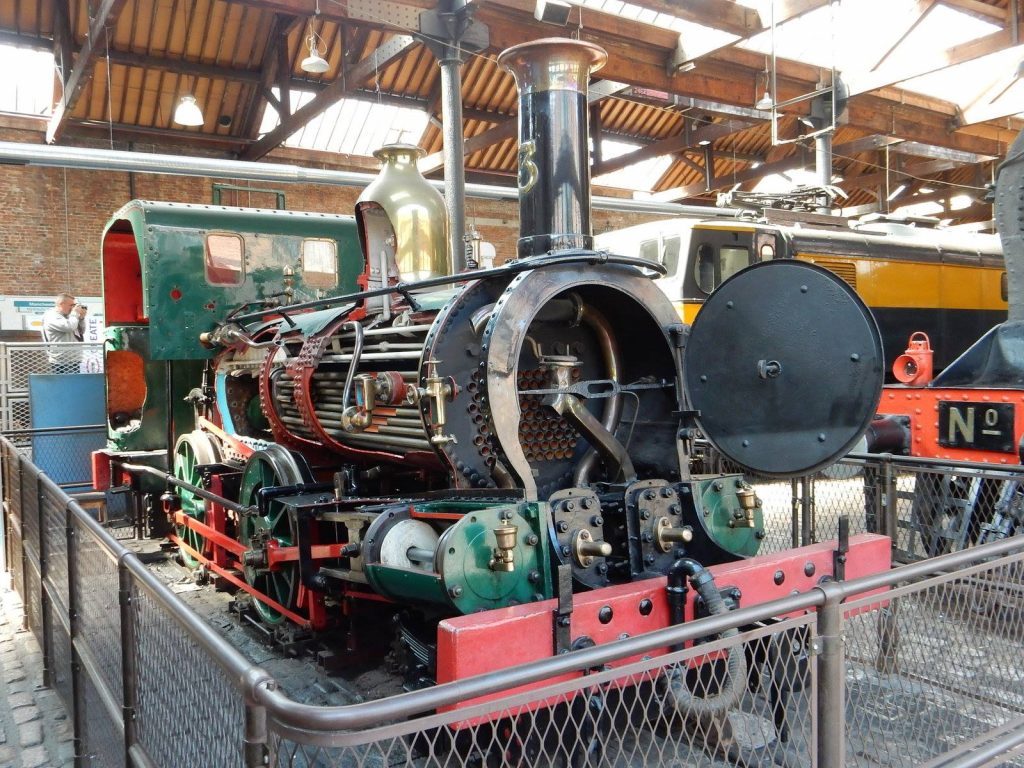
Boilers were regularly replaced on all the locomotives. They were constantly put under unique stresses caused by the nature of the line and its operation. The steep gradients required a constant high pressure to be available in one direction up the line. The many frequent stops at short intervals caused steam pressure to rise and fall rapidly in quick succession causing intensive repetitive fatigue of the metal components.
Engine No.7, bought in 1895, had a new boiler ordered from Britain ten years later in 1905. It was fitted the following year along with another replacement for No.8 on its own tenth anniversary. Fifteen years later both engines had them replaced again. No.9 was overhauled ten years after purchase, but it’s unclear if it too had its boiler renewed at the same time. Certainly it was replaced entirely in 1918 – another ten year interval. The last Beyer Peacock engine, No.10, began duties in 1905 but it’s twenty years in the records before note of a new boiler being ordered from the UK specifically for its use. A major overhaul might have been expected in 1915, but no record exists of what it would have involved.
This probably represents the frequency that complete boiler replacement was required: between ten and fifteen years. In total, six new boilers were ordered between 1905 and the closure of the line. Others may have been required, but the major overhauling of engines on around a ten-yearly basis were generally managed by the Hamrun engineering works. That they were capable of major boiler works is testified by the fact that none of the earlier engines 1-6 are recorded as requiring new boilers to be purchased from their original manufacturers.
It’s little surprise that the redundant boilers, at least six in number, were recycled in Malta. Whether sent for scrap, melted down and cast into new items, or reused closer to their original purpose, they retained value. That set up on its end in Hamrun served a new purpose for the railway, possibly re-engineered as a storage tank with a new spigot added at the bottom.
It will take careful measurement of the surviving structure at Hamrun to provide unequivocable proof of its origins. Only then can it be compared with the accurate dimensions recorded on the original engineers drawings. But, all the evidence considered so far points heavily toward this as being the only major survival of a Malta Railway engine, and a unique relic.
UPDATE
Adding to the analysis of the tank at Hamrun, it was kindly pointed out to me that the use of the blockwork can be a guide to judge its dimensions. The standard block of Malta stone, a franka, was generally 11inches high by 20-21inches long.
Using the mortar joints in the photo and extruding perspective points from them, the height and width of the tank can be compared with the block sizes. The assessment shows that the tank is roughly the same height as 9.5 blocks.
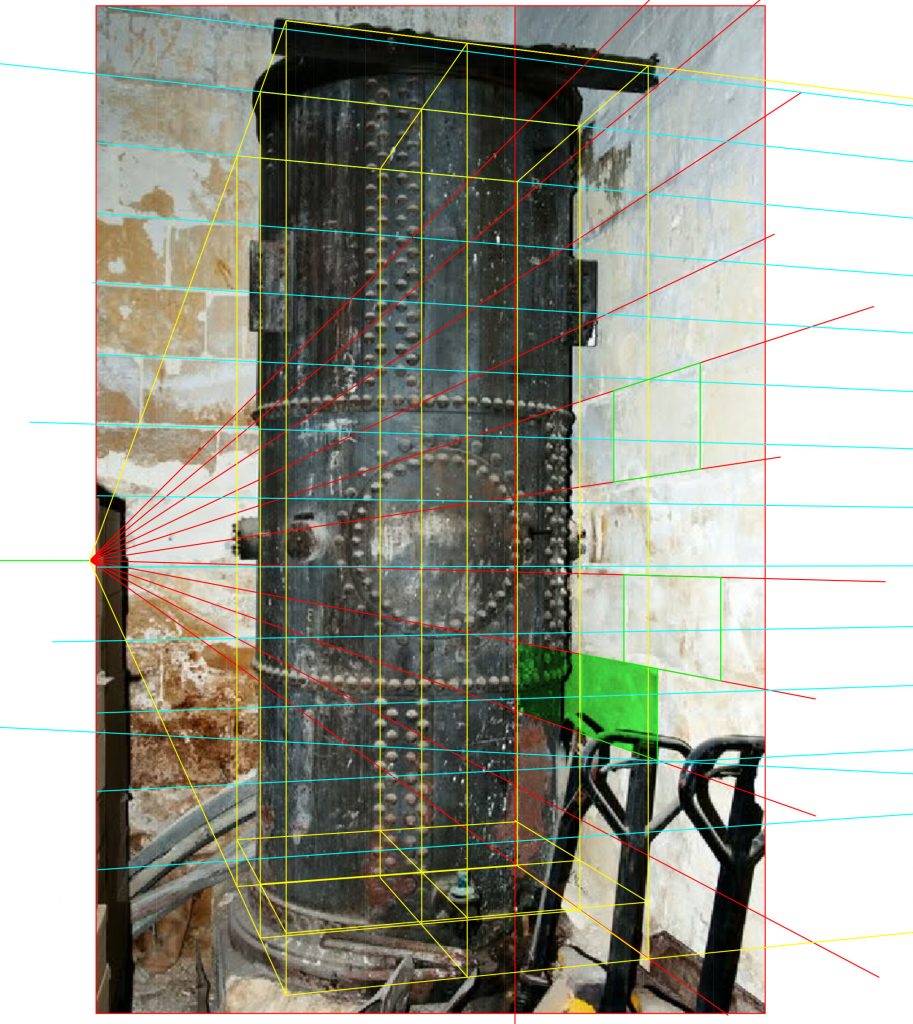
A less precise comparison can be made in the width of blocks as some are obscured by the tank itself. However, enough is visible to show that its diameter is roughly the same as the length of two blocks (shown in green).
Using this rather generalised approach, the height is roughly 2.6m
The diameter is roughly between 1.01m 1.07m
Comparing these measurements with the manufacturer’s original dimensions:
- Definitive boiler length (three boiler rings and endplate): 2813mm
- Height estimated through block comparison: 2654mm
Difference: 159mm
- Definitive diameter of boiler: 1070mm (smallest ring)
- Diameter estimated through block comparison: 1066mm
Difference: 4mm
There is an 6% margin of error in the height/length and just 0.4% difference in the diameter. It’s noted that I’ve made no correction for the impact of foreshortening in perspective which increases inaccuracy particularly in the vertical plane. Although far from being a substitute for measuring the structure in real life, estimating through comparison with block size generates compellingly similar dimensions to those of Beyer Peacock’s original designs.

No responses yet