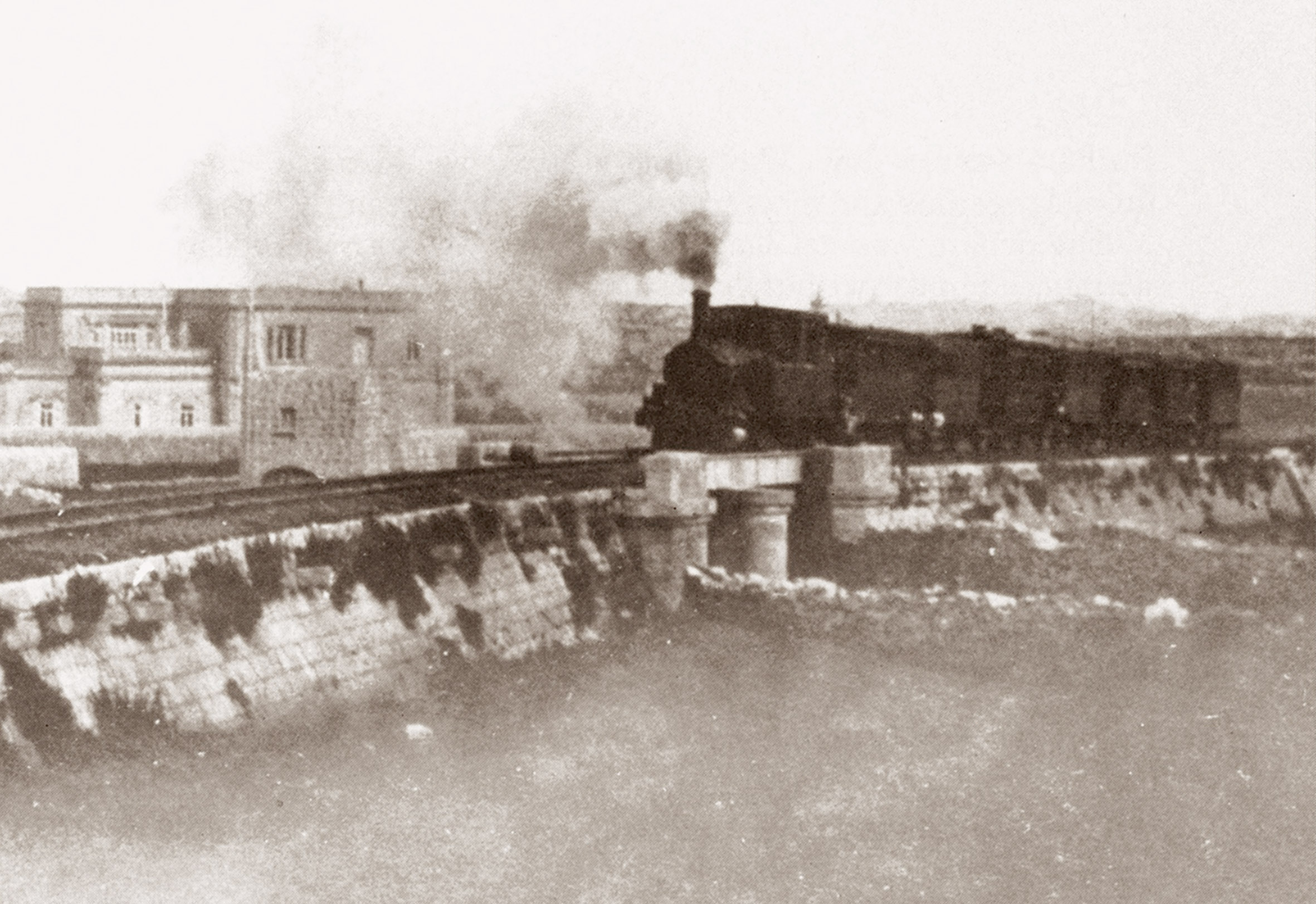
There’s often discussion of why all the Malta Railway locomotives faced the same direction, towards Mdina. Even locomotive No.4, which faced the opposite direction for a number of years, was turned to match the direction of the other engines.
The reason was twofold: the steep gradients of the line and fundamental design of steam locomotives.
Malta’s landscape dictated the gradient of the line. Valletta is near sea level whilst Mdina occupies a high-point on the island; it was inevitable that an uphill journey was unavoidable. The line ascended 500 feet from Valletta’s station to the old capital.
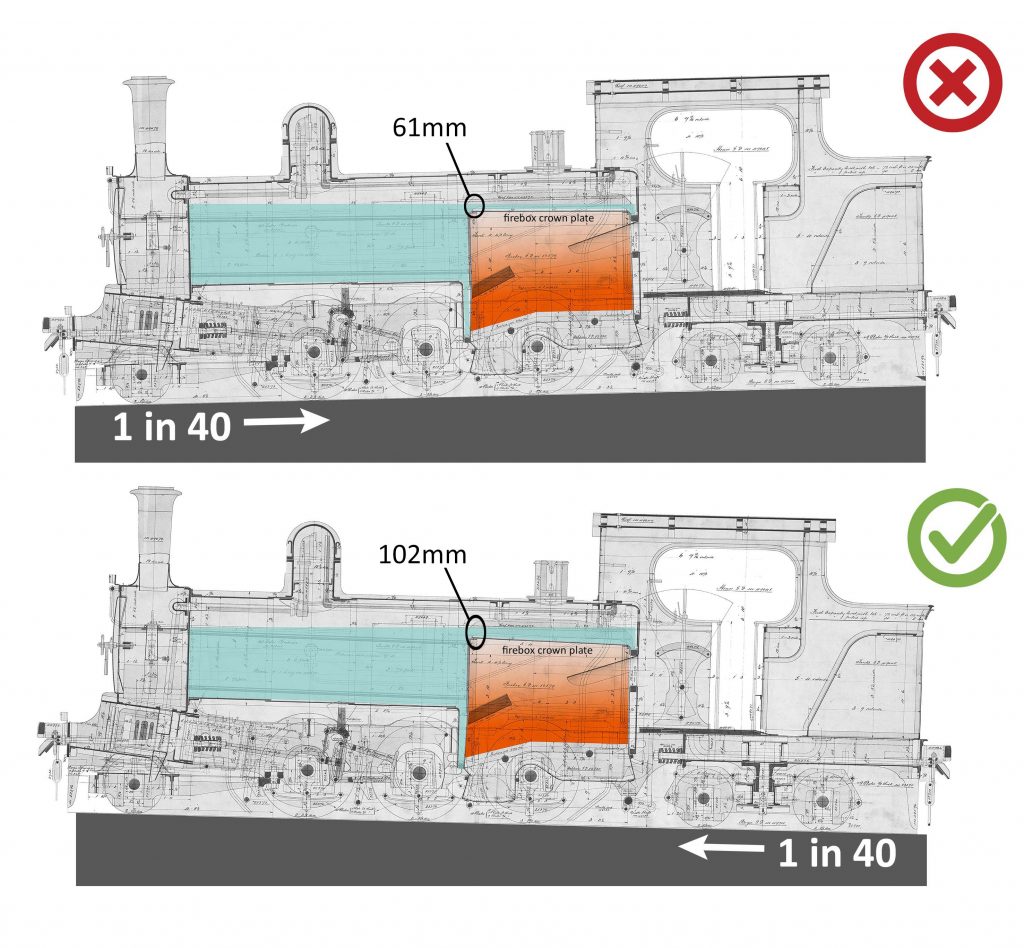
The topography also required very steep sections, up to 1 in 40 in places. This represents a serious challenge for most trains and requires a good head of steam and high power from a little locomotive.
It was the driver and fireman who were responsible for managing the engine during these ascents. It was not just a case of putting coal into the fire and starting and stopping the train; these men had to carefully manage every aspect of the engine to ensure its performance was maximised and safely operated.
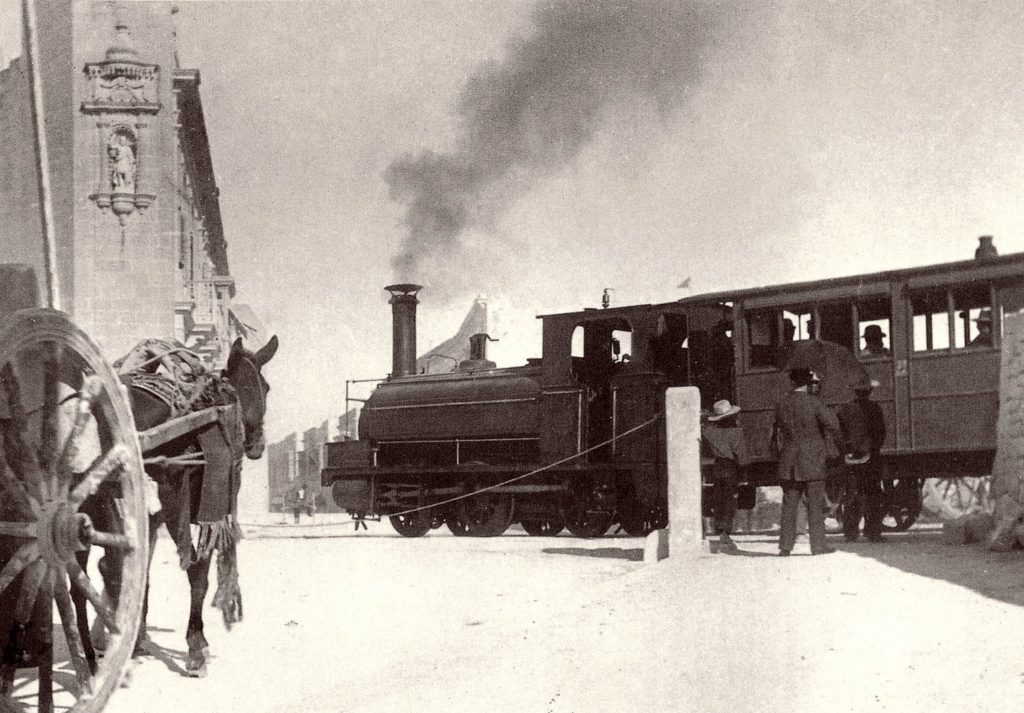
Water in the boiler was a key concern; Too high and it could slop into the steam dome and pass down the pipes to the cylinders, damaging them (called priming). Too low and the ability to raise steam was handicapped and there was a real risk of explosion if not rectified quickly.
It was the fireman’s responsibility to ensure that the water level was enough to adequately cover the firebox crown sheet; This is the top plate of the firebox where the greatest surface area and highest heats were likely. This surface had to be kept covered by boiler water drawn from the engine’s tanks. The fireman controlled that flow. Injecting cold water from the engine’s tanks into the hot water of the boiler came with its own issues. Despite pre-heating, adding water would reduce the boiler heat and efficiency and had to be carefully judged.
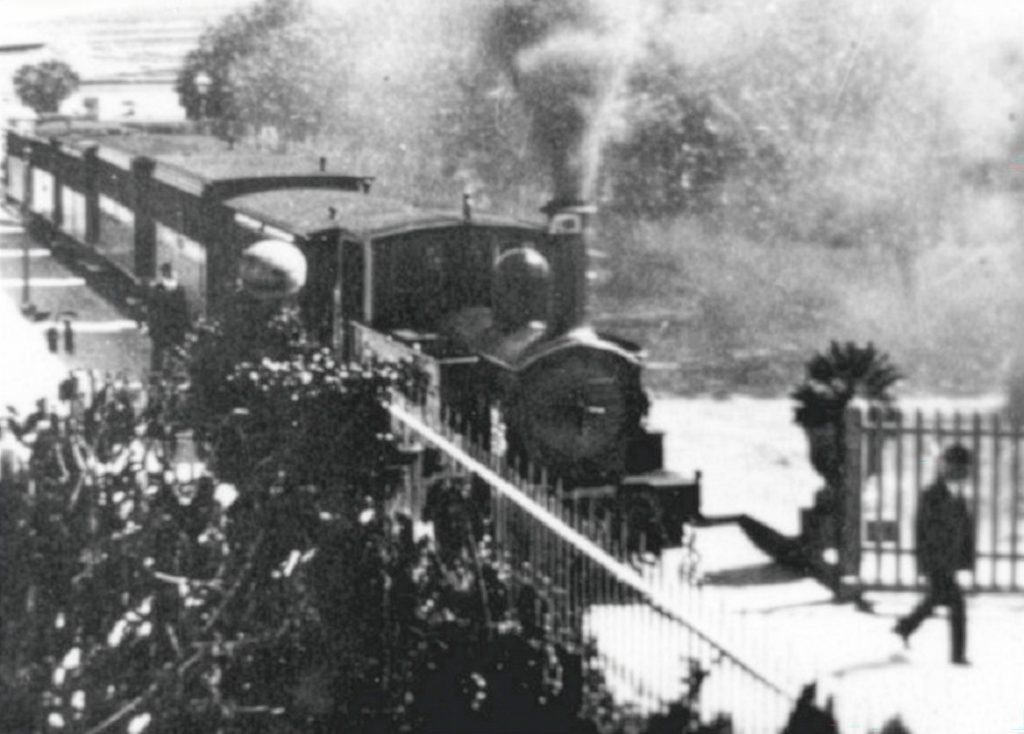
Had locomotives faced downhill the level of the boiler water would have gravitated towards the front of the engine and away from the firebox crown sheet, risking damage or explosion. This would need to be compensated for by increasing the water level, but, in this configuration, facing Valletta, it simultaneously increased the risk of priming.
Facing uphill ensured much more efficient coverage of the firebox crown sheet and made it far easier to raise steam enough to take the demanding assault to Mdina.
But the Malta Railway wasn’t all uphill in the same direction. The skill of the fireman in preparing the engine would come to the fore when trains left eastbound from Hamrun, before the gradient increased in the opposite direction, towards Valletta. The line abruptly assumed a 1 in 50 ascent and then a long stretch through Floriana tunnel at 1 in 60.
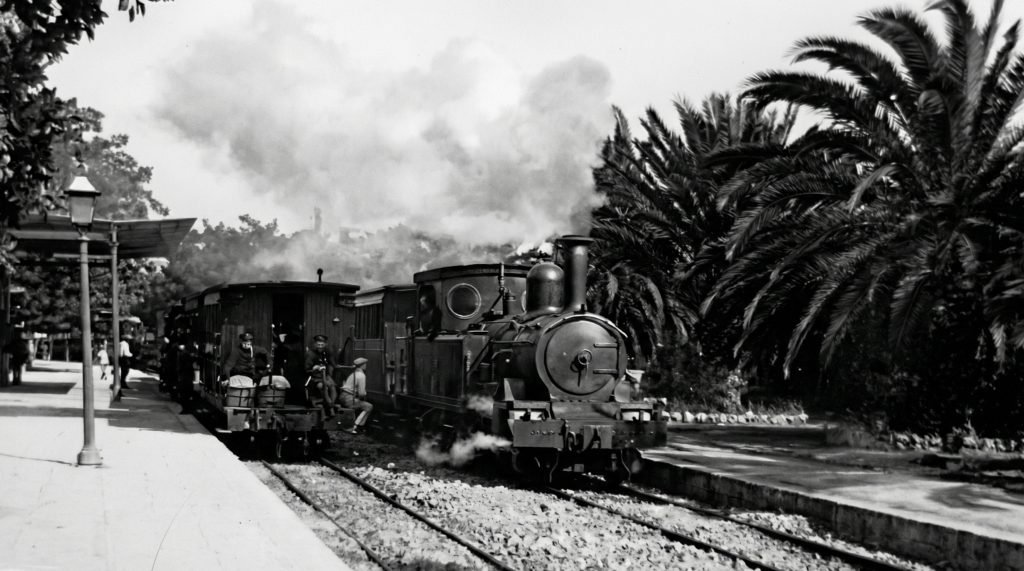
For this stretch the driver would demand engine power from his fireman, a high boiler pressure to drive the engine back uphill. This required preparation; the fire had to be well-stoked, and the fireman had to account for the sudden change in water level as the gradient reversed and the water withdrew to the smokebox end of the engine and away from the crown sheet. It must have been a busy time for the fireman, trying to pre-empt the changing demands of the engine, increasing the heat and balancing the water at the same time as the overall efficiency of the boiler reduced.
With these factors considered, it’s perhaps not a surprise that Floriana tunnel was the location of a boiler explosion early in the life of the railway, and, when the Government took over running in 1891, the boilers of all the engines were in a deplorable and unsafe state after eight years of poor management.

No responses yet