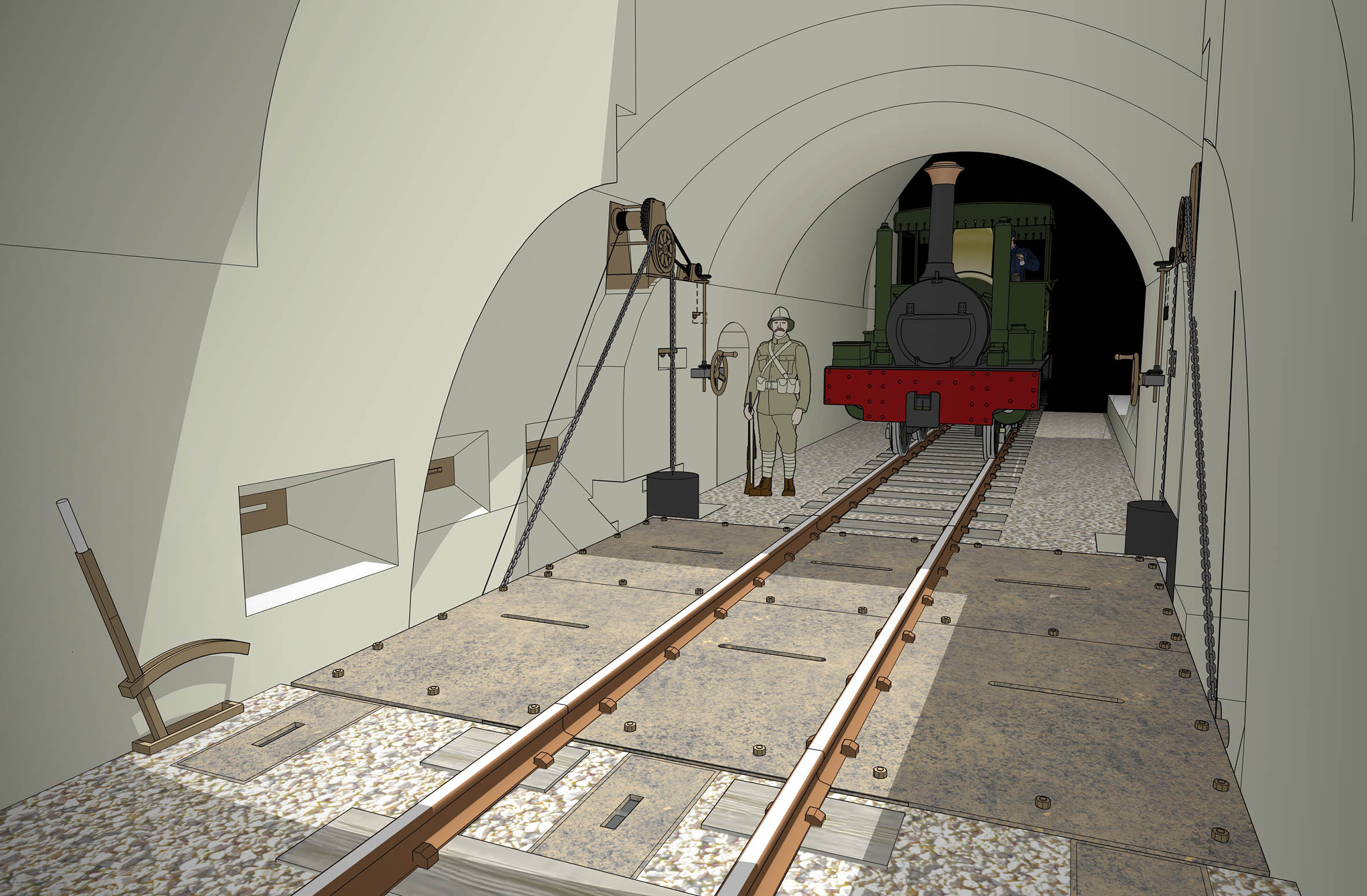
Since first publishing a new analysis of the evidence for the ‘lift bridge’ in the Floriana railway tunnel, new information has come to light. From a private collection, newly discovered drawings provide more insight into the proposed ‘lift bridge, a feature required by the British Military authorities to protect Valletta from potential attack through the tunnel.
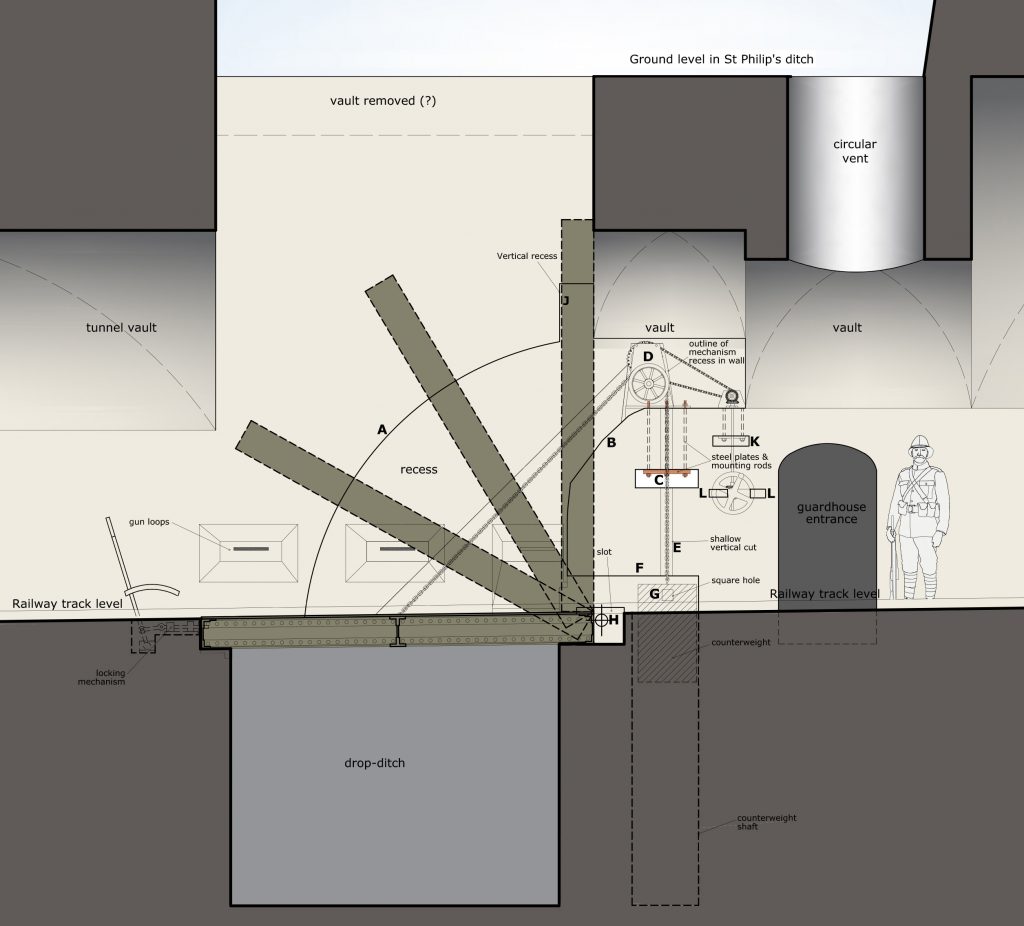
What’s reassuring is that the original conjecture, that there had been a lifting drawbridge here, was largely correct. The new drawings detail the required stonework and steel interventions to form the bridge. This now allows for a better interpretation of the surviving features in the tunnel. The drawings don’t, however, solve every mystery.
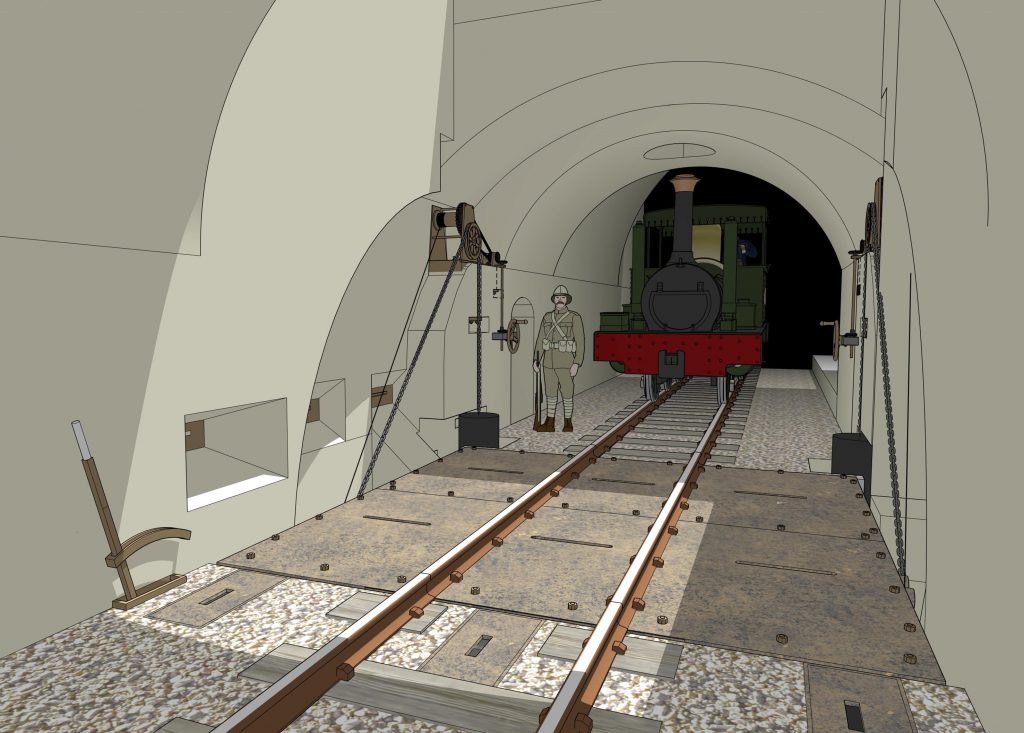
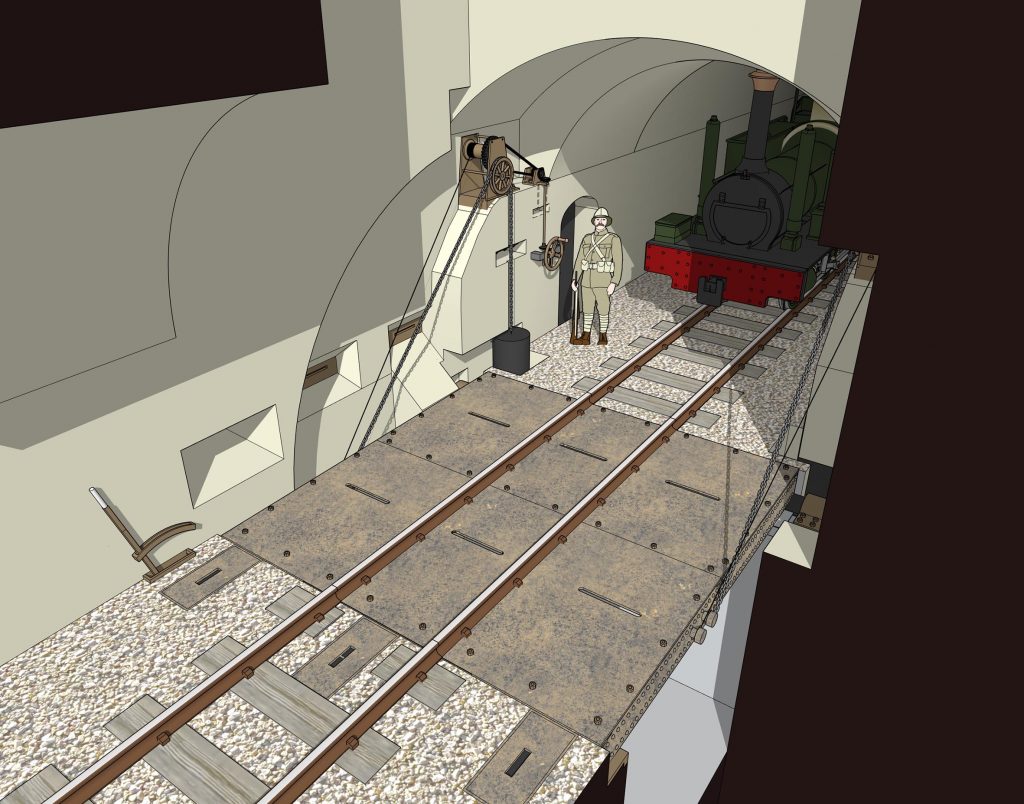
We now know that the drawbridge wasn’t balanced with a bascule counterweight beneath track level, but instead operated with weights suspended by chains on either side. It turns out that the shallow vertical channel, E on the drawings, accommodated the chain drop with the counterweight suspended from it, partially under the recess cut into the side of the tunnel (F).
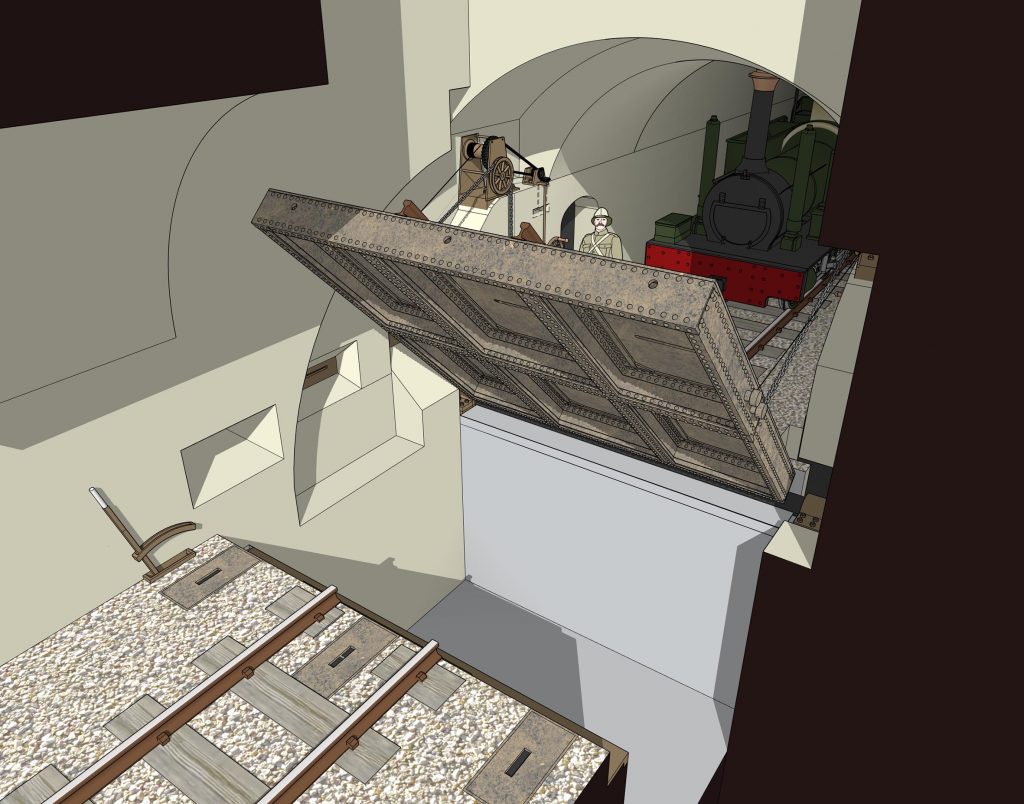
A shaft or well must exist under this location, one large enough to allow for the counterweight to descent down, and around 3m deep, adequate enough to draw the bridge into a vertical position. The square hole (G) appears to have some connection with the weight, but the drawings haven’t been seen in detail, and the use remains obscure.
Quick calculations show the bridge would have weighed approximately 6 tons, so each counterweight would need to have been around 3 tons each to keep the balance even.
The chain would have required a pulley wheel between the counterweight and fixings on the sides of the bridge; this is likely to have been part of the now-missing mechanism (D) that was once fastened down by the surviving bolts and pattress plate (C).
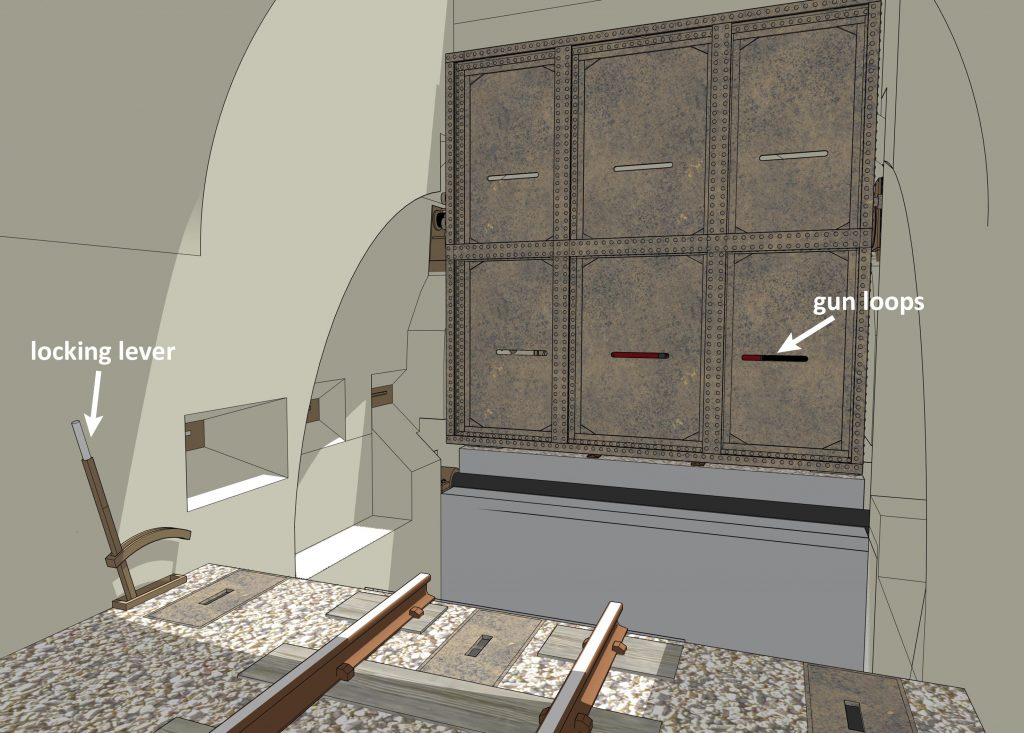
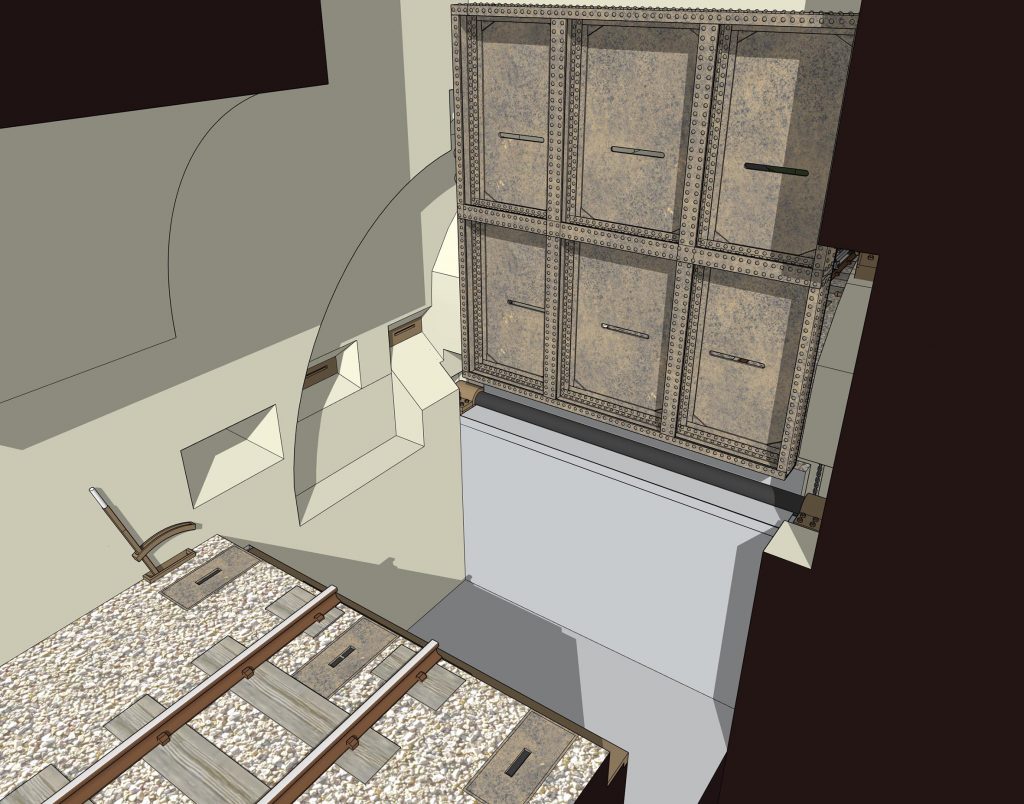
The bridge deck itself can be more confidently reconstructed using the new drawings, though remains broadly similar to the original guesswork. One new feature is the incorporation of a steel deck with gun loops cut through it. When closed, these would give a protected position from which to fire at any attacker approaching up the tunnel.
Another discovery has been the locking mechanism used to fasten the bridge when in its everyday lowered position. Three draw bolts were fitted beneath track level, connected by a rod and operated by a single lever on the north wall. This seems an oddly exposed location risking the success of the whole defensive measure if surprise attack prevented the bolts from being disengaged quickly.
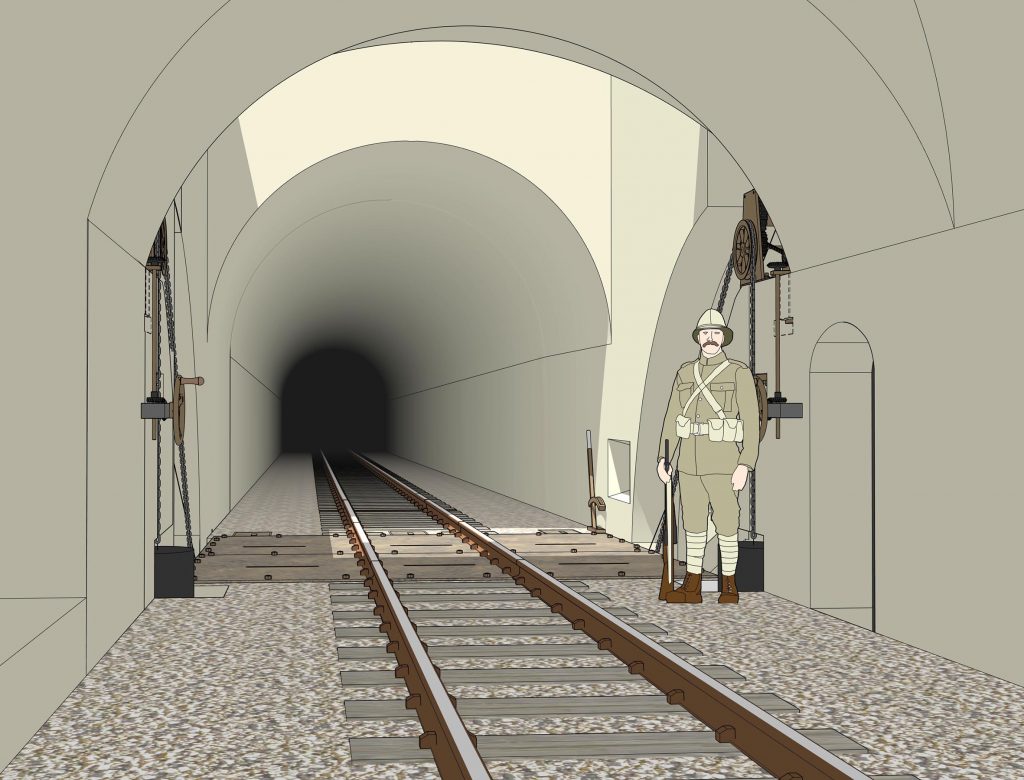
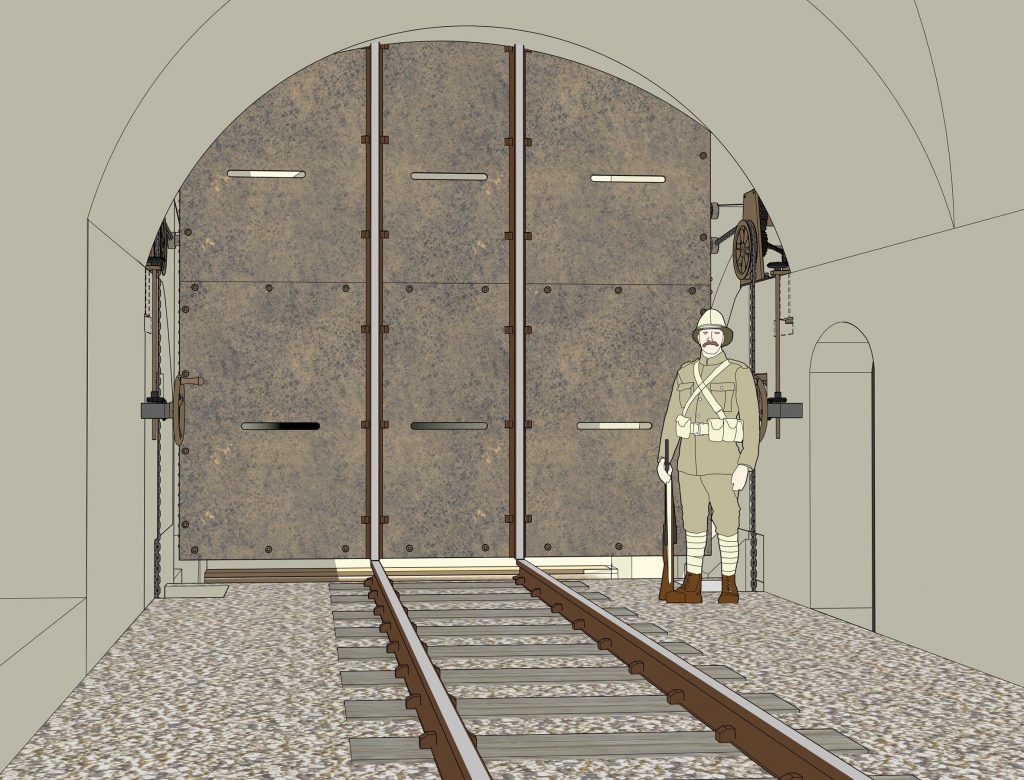
Questions still remain over how the bridge was mechanically raised. The revised reconstruction has moved the raising mechanism to make better sense of features L and K on the diagram. The existence of more bolts and pattress plates at K is now confirmed by the drawings, so more equipment must have existed above them.
It is postulated that a winding handle associated with fixings L powered a rod, gears, and a chain-driven windlass at D. A steel cable would have wound around this and hauled the bridge up with the counterweight doing the majority of the lifting. That the counterweight was separate from the lifting mechanism is clear from the drawings, though seems to result in an unnecessarily complicated arrangement.
Another final challenge is how the bridge pivoted. The drawings show that it rotated from a point higher than its top edge, level with the top face of the track rails, but are ambiguous as to how this was achieved. They also show the recesses identified from site investigation (H), assumed to house bearings, as integral to the bridge operation, but there’s a real disparity in where the fulcrum point was.
Below: Sequential diagrams showing a section through the tunnel with the drawbridge being raised.

No responses yet