The Malta Railway never produced much advertising material. Most printed matter associated with the line was in the form of timetables, tickets, paperwork, and the odd official report. The original Company created a few basic printed posters promoting events, but these were for basic information rather than anything eye-catching.
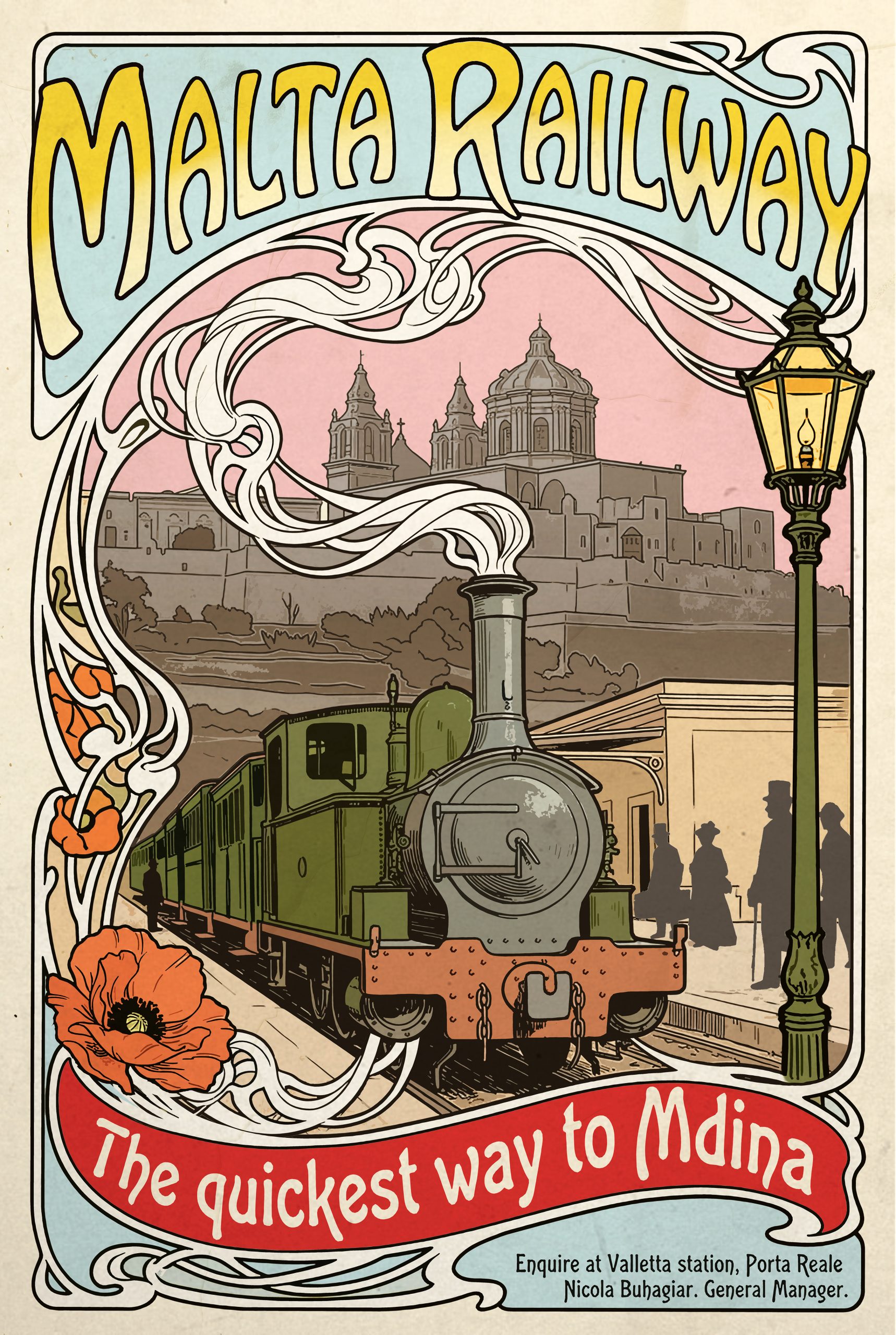
To fill this void, I’ve created a few entirely new travel posters, ones that might have graced the streets of Malta early in the 20th Century. Although not a genuine historic railway posters, they take inspiration from advertising from three different eras.
The first is inspired by Italian Art Nouveau design that permeated into Maltese culture before WWI. Although distinctly at odds with the tastes of the Governing British, the louche new style became commonplace in Malta, particularly in architecture. Roseville in Attard is a fine example of how it influenced design.
The poster advertises one of the Railway’s most attractive features, being the fastest way to get to Mdina for locals and tourists alike. This was a time when the Railway had just extended to Mtarfa and would have been keen to capitalise on its investment. The stretch of line beyond Attard was lightly used, and a poster like this might have driven much-wanted traffic.
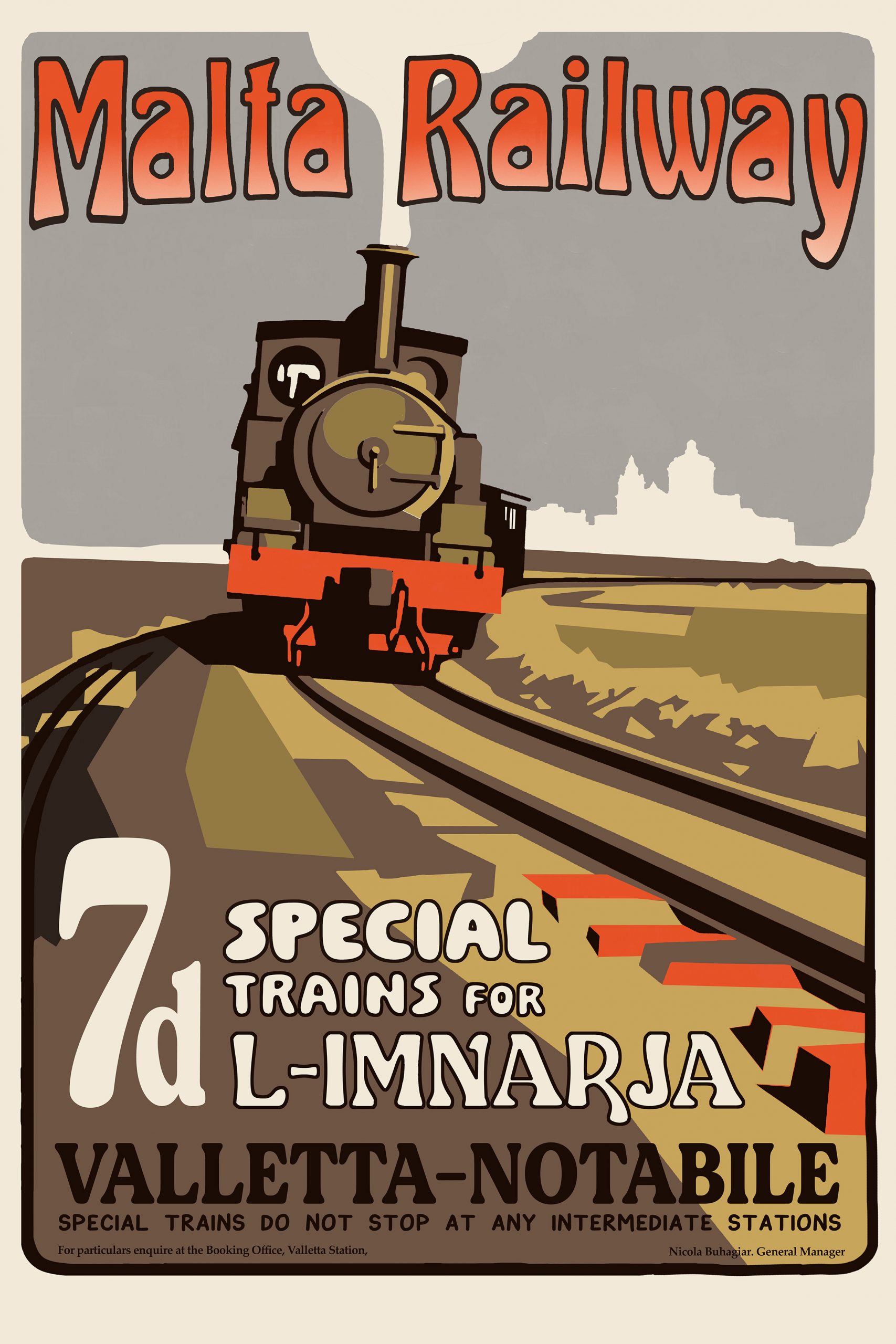
A second poster is designed to be from about 1912. It advertises special trains scheduled for L-Imnarja. The Malta Railway made similar arrangements for other significant events at towns it served along the route. Railway tickets on Sundays and Feast days were double the standard fares on the line.
Special trains did, however, have the advantage of running direct and non-stop. This could cut as much as ten minutes off journey times.
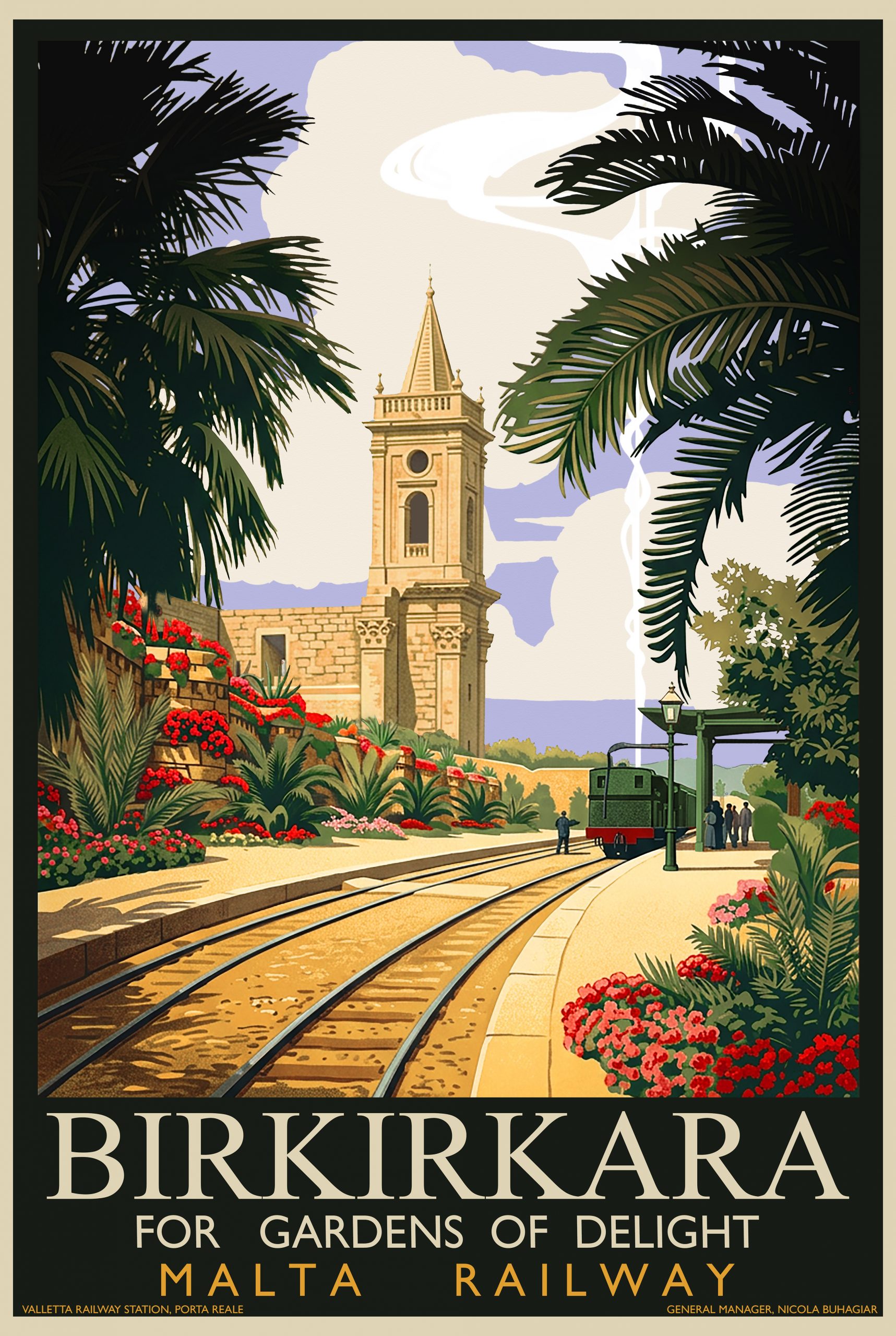
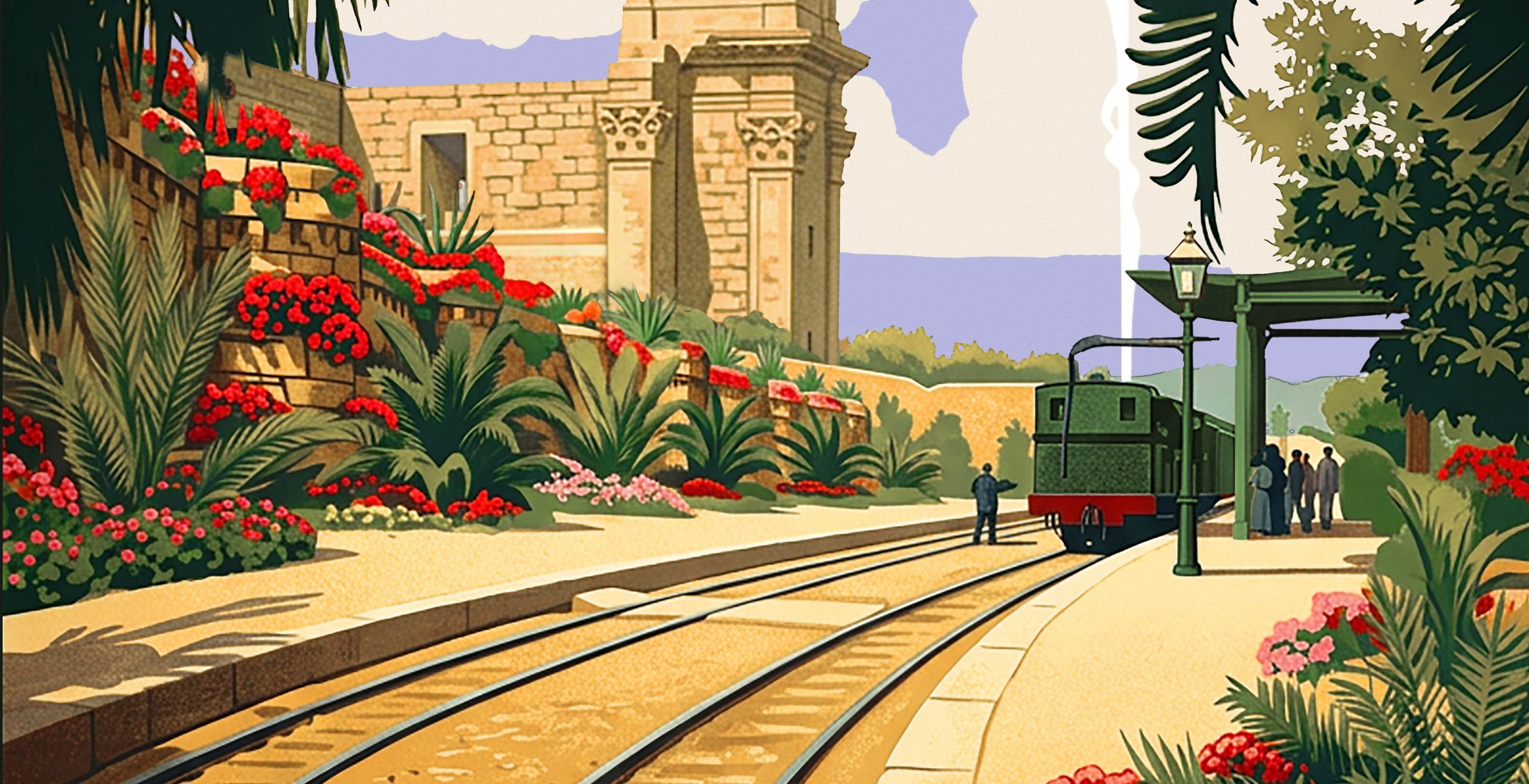
The final represents the railway in about 1928, this time advertising the delights of the station gardens at Birkirkara. This was a time when the railway was struggling to attract customers. The gardens at Birkirkara were an attraction that neither the tramways or busses could boast so something that might have appealed to visitors.
Like many travel posters of the era, the key features are emphasised for graphic impact and block colours add eye-catching vibrance. Again, not Ai, but and intensive photoshop job with some Ai details developed from original photos.

No responses yet