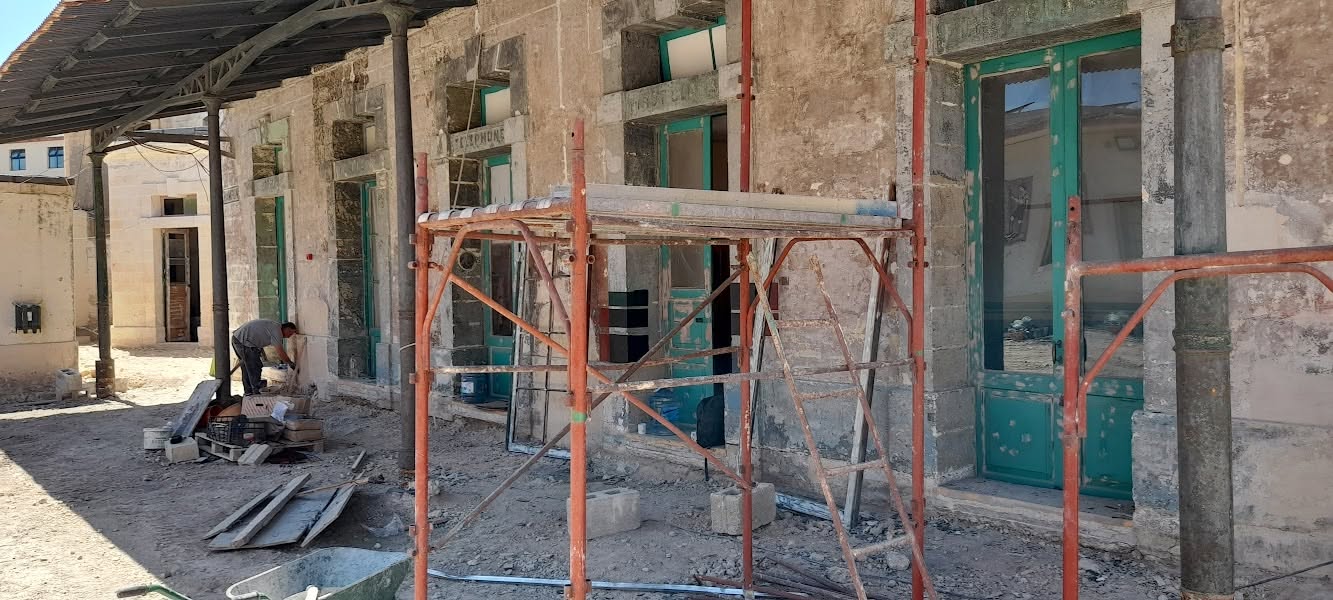
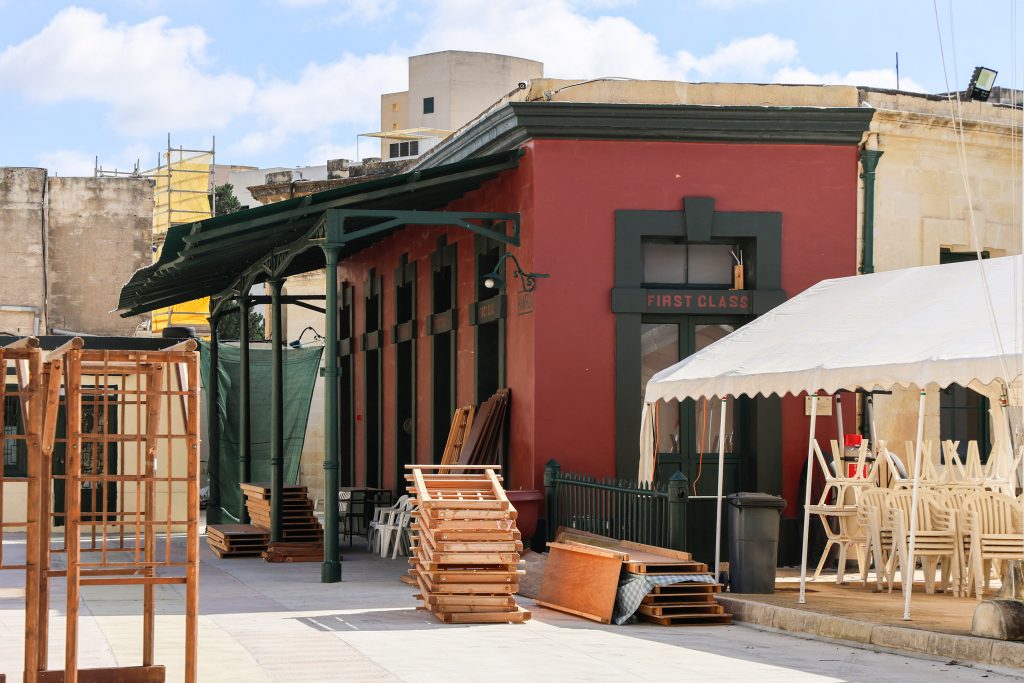
Back in 2024, the surviving Malta Railway station building in Hamrun underwent restoration and received a refreshed new look. Strikingly, the colour was transformed from the familiar off-white to a vivid red and green.
The restoration was diligently undertaken by Bezzina & Cole architect and engineers and with oversight from Government conservation officers. It was underpinned by research into the building’s development informed by the many drawings held in the National Malta Archives. But, as with any restoration project, new finds were made during the gradual stripping away of modern materials and finishes; this required changes and new approvals from the Planning Authority.
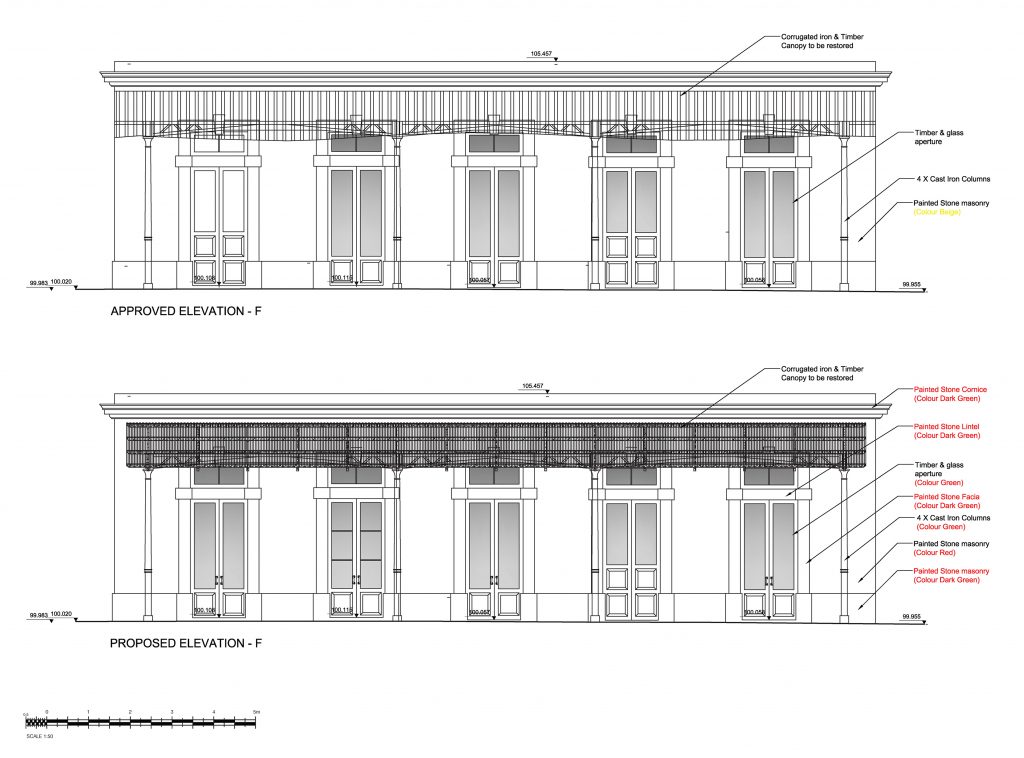
The applications, in the public realm on the Planning Authority website, include drawings and specifications that are an important record of the building, finds made, and how they informed the finished appearance.
It was discovered that the walls of the building had been painted vibrant red, and the architectural details were picked out in the same green used for the locomotive and carriage livery. The public access report can be read in full here.
The painting of Maltese buildings in red ochre became the fashion in the late 19th Century, the most prominent expression of this being its frequent application to church domes across the island. But other significant buildings were also given this colour treatment. Museum station is also documented having been highlighted in this red ochre scheme.
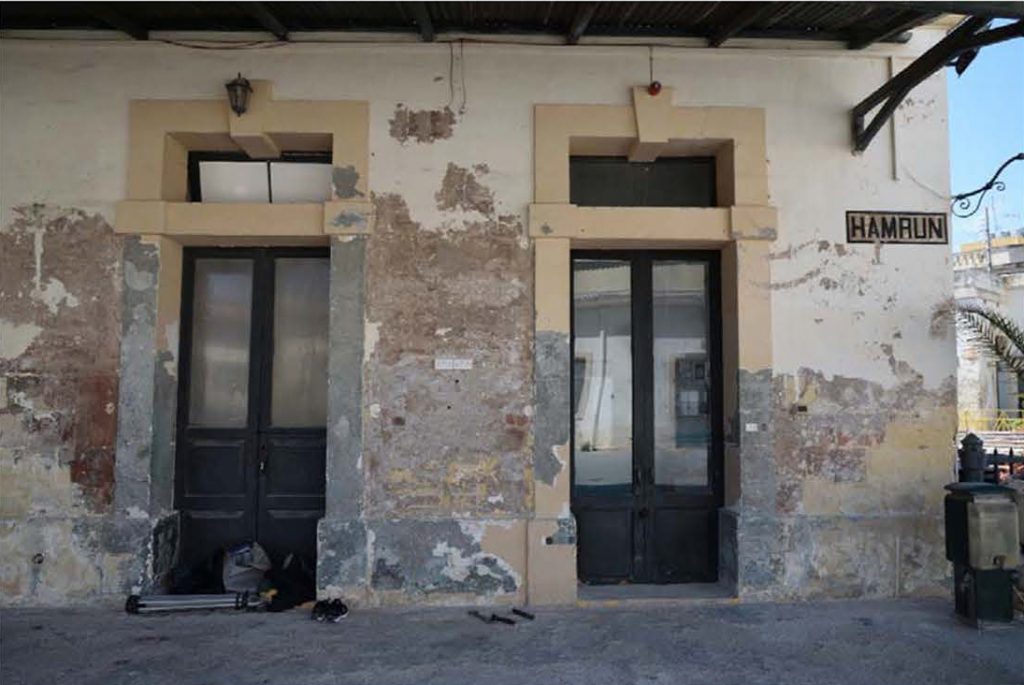
The paints originally used at Hamrun were identified, unusually, as being oil-based rather than natural pigments; This is a likely result of the Railway using the same paints as already available for use on locomotives. The modern finishes are similar to the originals, and a compromise between authenticity and the breathability of the stonework. Ironwork was also returned to its original appearance and consolidated for the future.
Above each of the doors, original painted signage was uncovered, recorded, and reintroduced to complete the original appearance. During works it was also confirmed that the original building erected in 1883 had not been demolished when new waiting rooms were needed. Instead, the old building was extended to the east and considerably raised in height.
Whilst not a protected Scheduled Building, it’s reassuring that such care was taken in the restoration works.

No responses yet