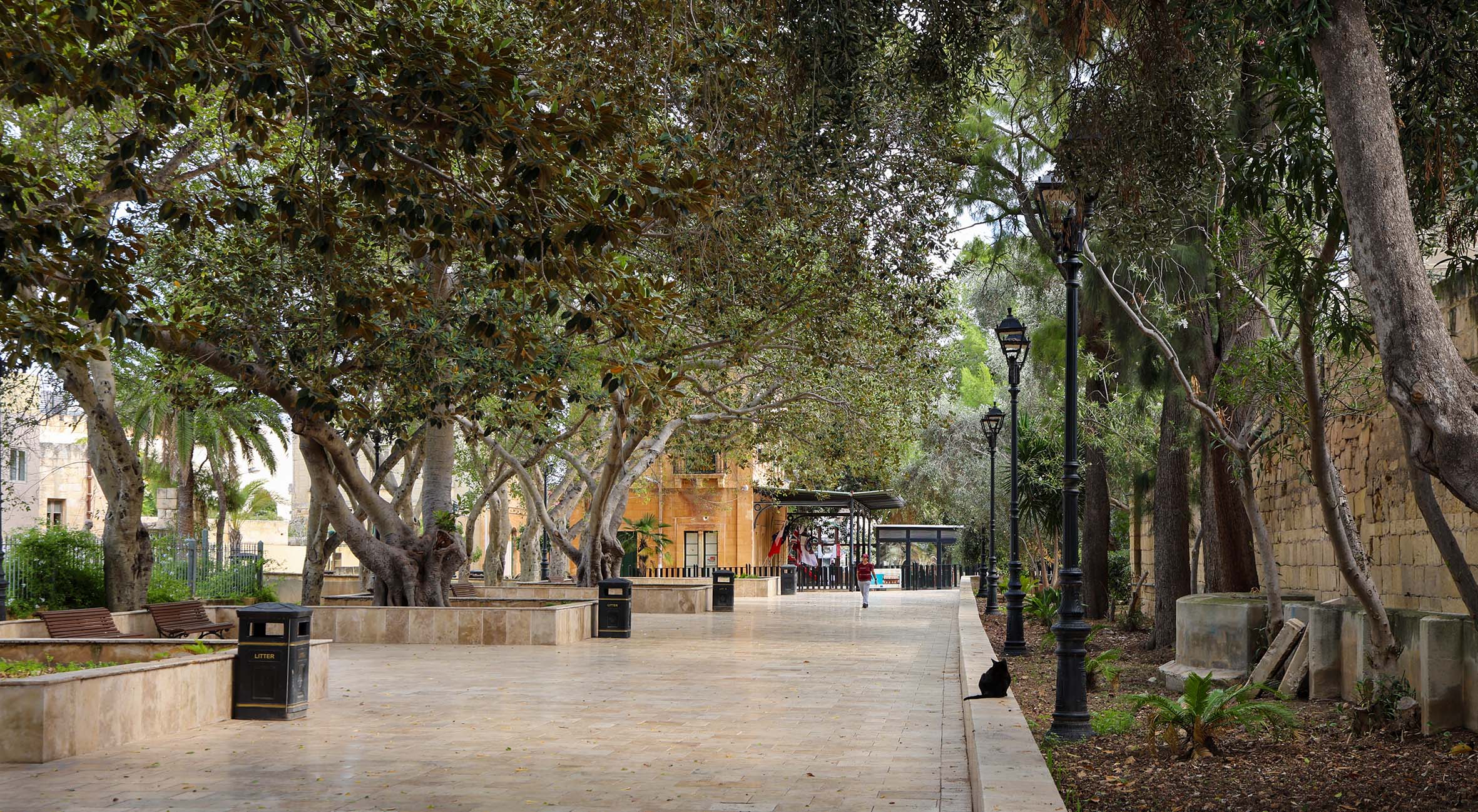
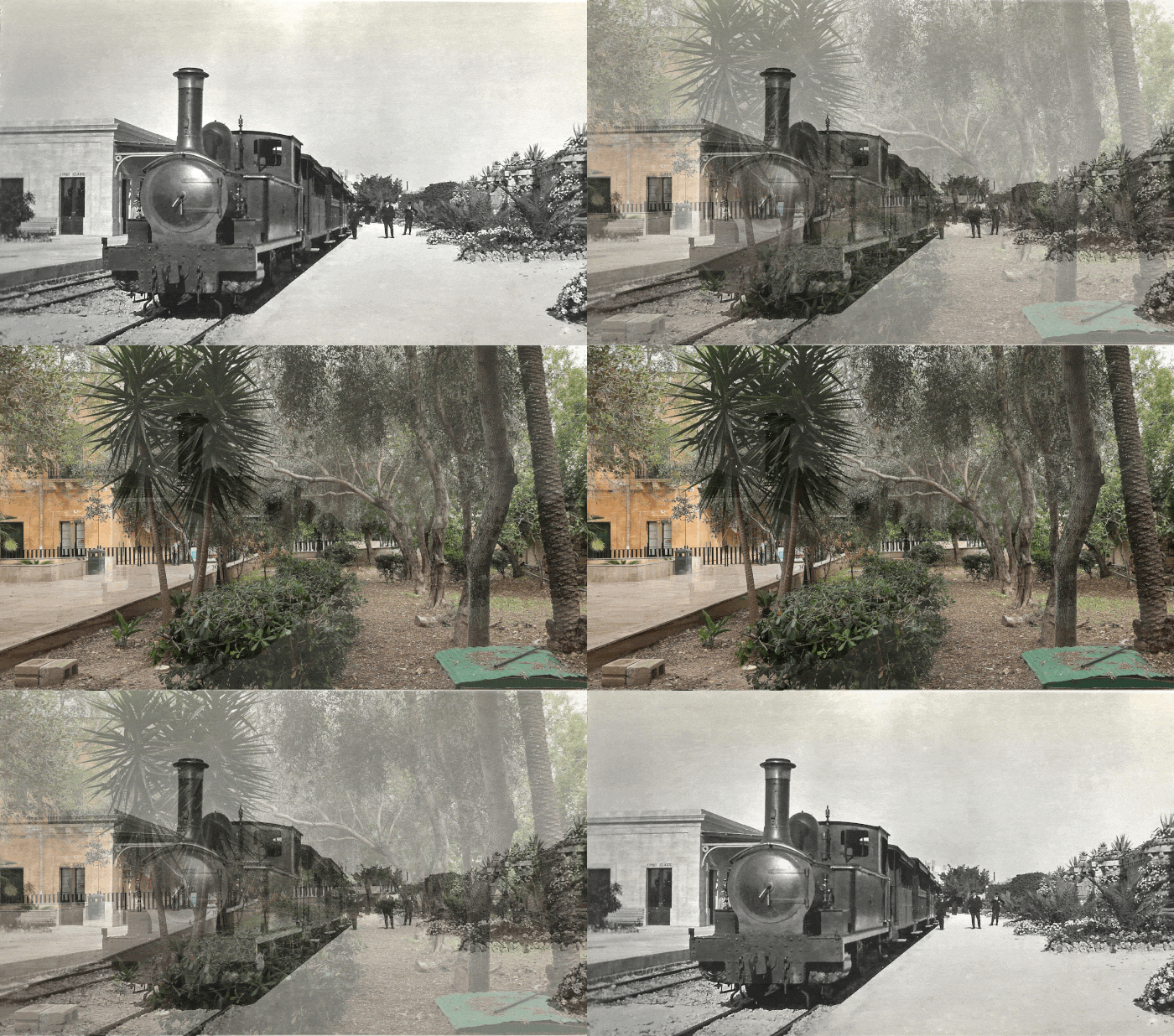
It’s pretty extraordinary that around 60% of the trees in Birkirkara’s station gardens survive from when they were first planted by the Malta railway over a century ago. They were originally introduced along station platforms to offer shade for passengers waiting for trains, but later, the embellishment of the stations with elaborate garden planting, was used to attract custom.
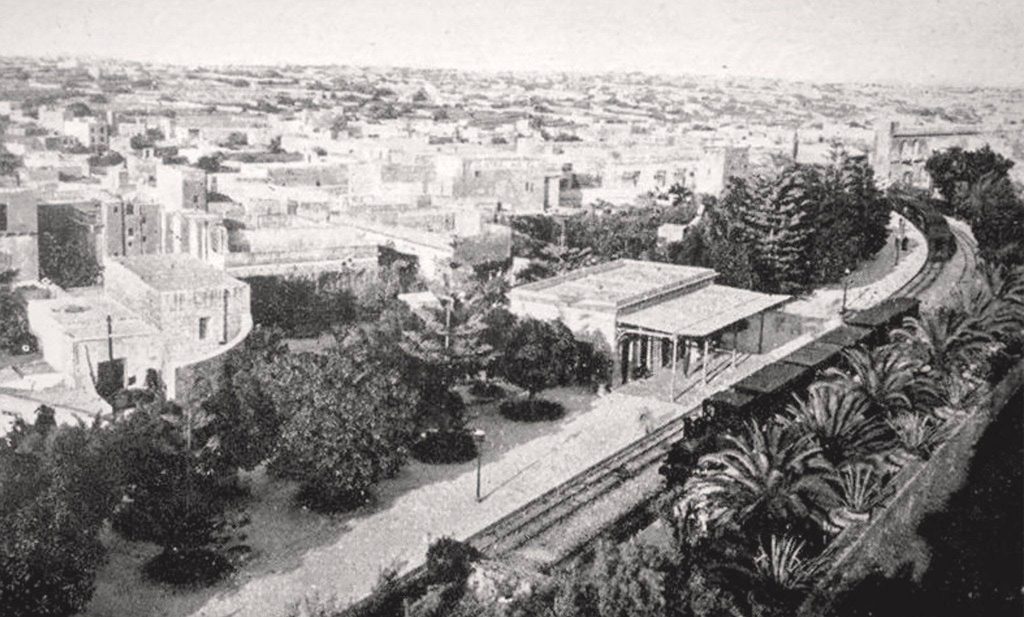
Overlaying a modern arboriculture plan over an historic plan, many original planting locations match convincingly with surviving mature trees. Some are less convincing matches, and some seemingly very mature trees appear to have no parallel planting location on the 1918 drawing.
Most resilient appear to be the various fig trees. Indian Laurel Figs were planted along the back edges of the platforms and account for more than half of the trees still growing from the railway era. They still line the station boundaries on north and south.
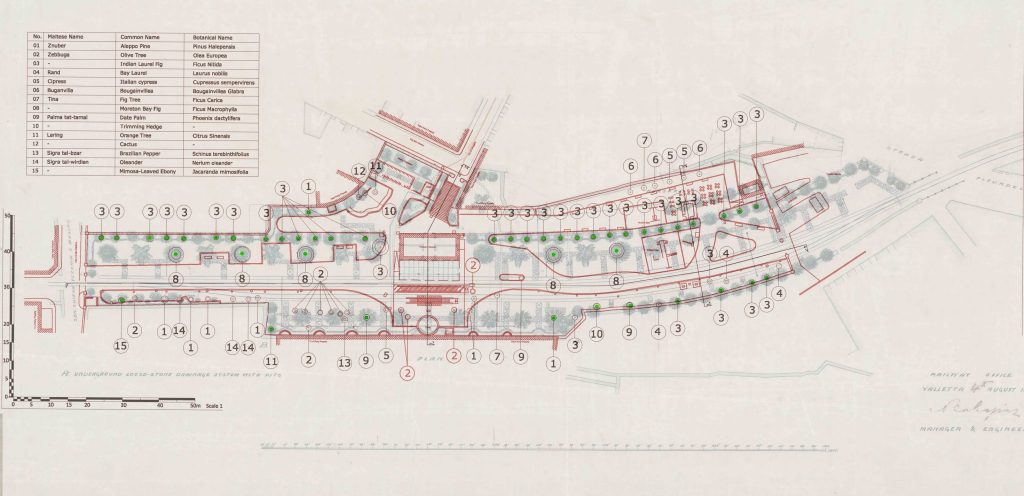
The original planting plan along the northern platform alternated Moreton Bay Figs with palms, but the latter seem to have been less durable and have all since perished. Five of this species of Fig have thrived since, growing to mammoth proportions.
A different character was chosen for the southern platform, with date palms the preferred planting in the big circular beds along its central section. Like the north side, the palms here have mostly perished, though a single Date Palm still survives.
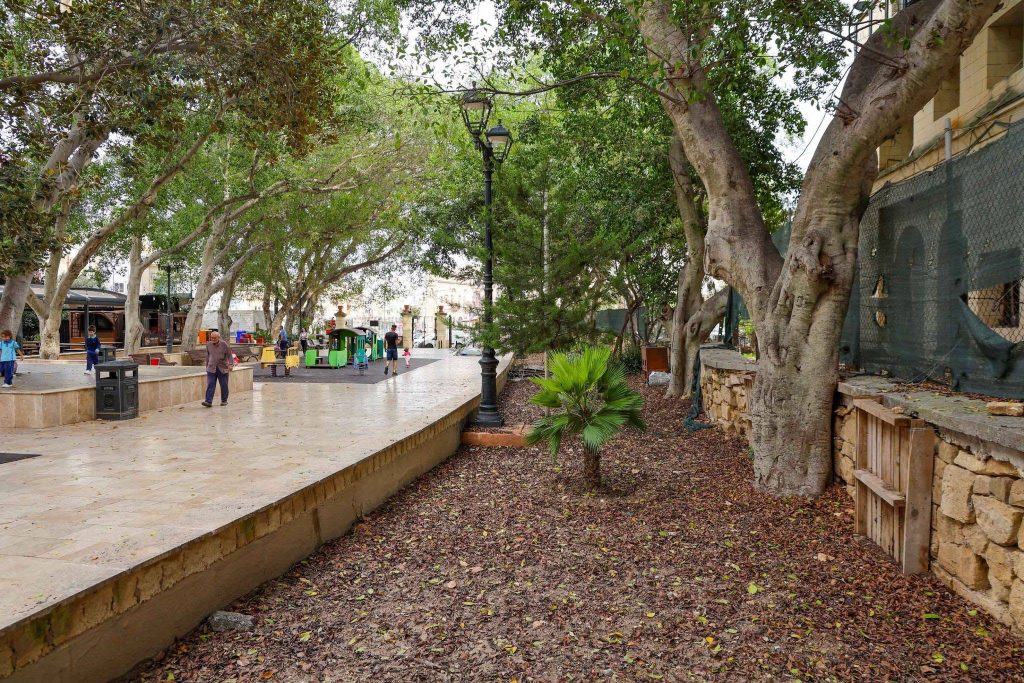
A single citrus tree looks to have been part of the original scheme, surviving on the south-western edge of the southern platform. Nicola Buhagiar, the railway manager who championed the station gardens, was noted as having selected bitter-tasting species to discourage children stealing them.
It’s remarkable that so many of the original trees survive today. Probably planted when the station was rebuilt in 1910, they are now 110 years old, far outliving the railway itself and now Buhagiar’s most valuable legacy at Birkirkara.

No responses yet