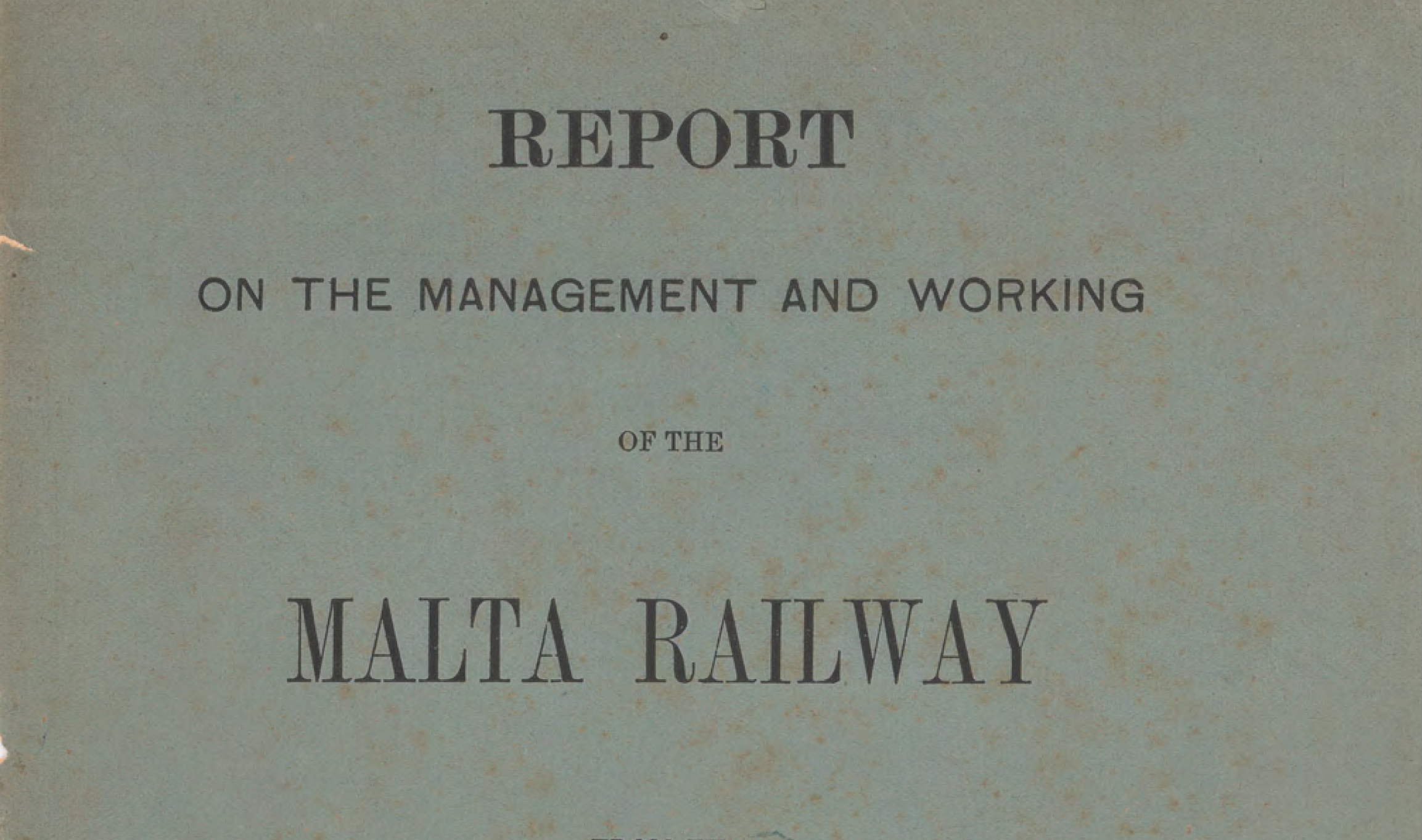
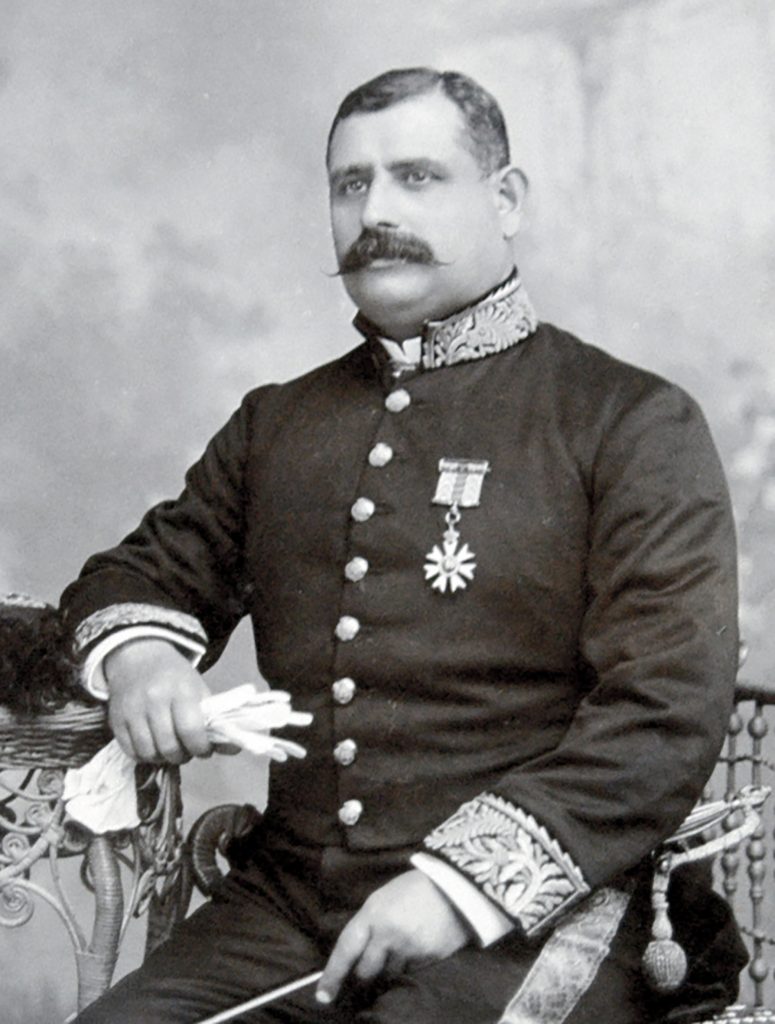
When I was in Malta in October 2025 I was fortunate enough to be gifted a copy of an important report concerning the Malta Railway. It was given to me by Theresa Gatt, descendant of Lorenzo Gatt, the first railway manager appointed by Government, and relied upon to put their newly acquired railway in order.
The report is a detailed record of the first full year the railway operated in Government hands, providing fascinating and important detail on the challenging circumstances Gatt faced in recommencing services and his plans to develop the line further. With permission, I’m making it available here.
It is addressed to “the Honable [sic] and Most Noble Count G. Strickland” the Government’s Chief Secretary of Malta. It begins detailing the locomotives, those inherited from the old company and those newly acquired, and how they were operated. The scale of the track and infrastructure required to reopen the railway is graphically detailed, including over 12,000 new sleepers and the replacement and strengthening of several the bridges.
The report then goes on to describe the station improvements introduced, many necessary to help protect revenue, but others to improve conditions for passengers including the tunnelling of a new ramp at Valletta station. Most importantly for the future of the railway, something Gatt makes particular note of, was the formation of the technical school and expansion of the grossly inadequate engineering works at Hamrun.
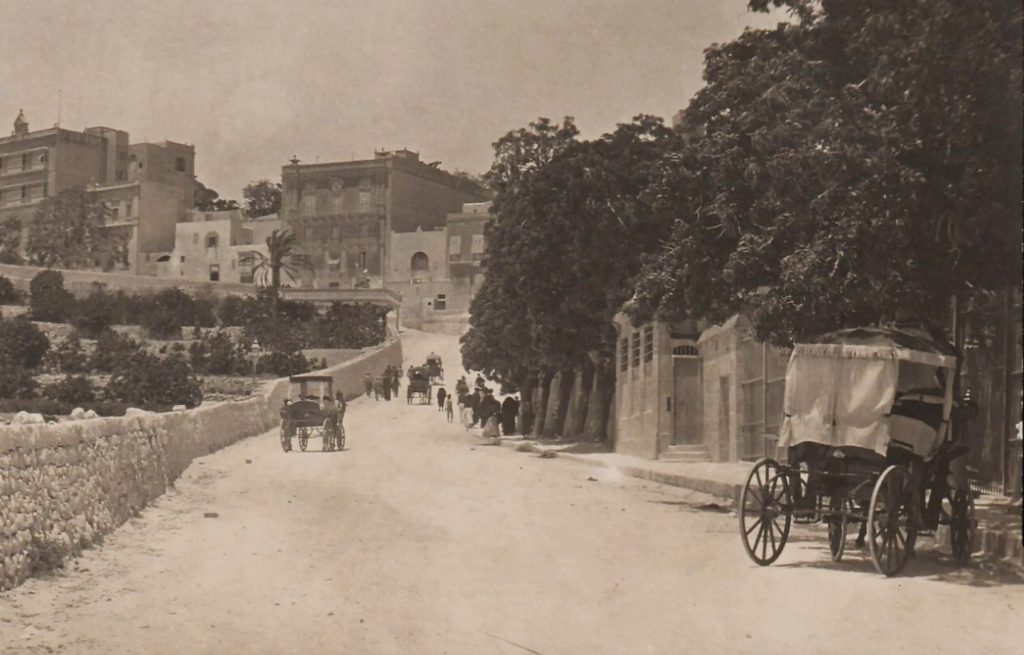
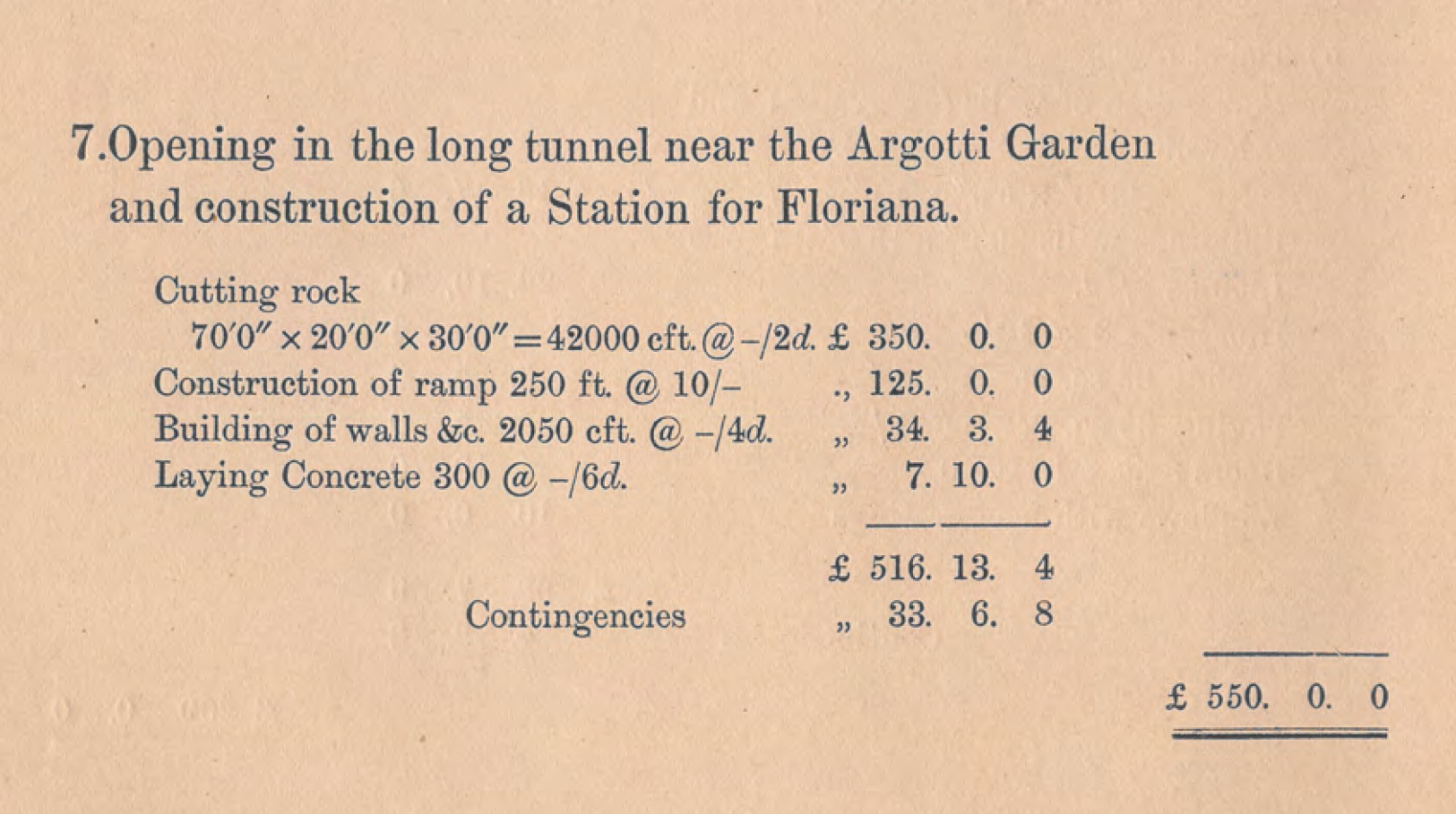
Perhaps the most interesting sections in the study of the railway’s history, are the recommendations listed for the improvement of the line and traffic. These, accompanied by an appendix in which cost estimates for each are itemised, help establish dates for several important works for which little other reference has so for surfaced.
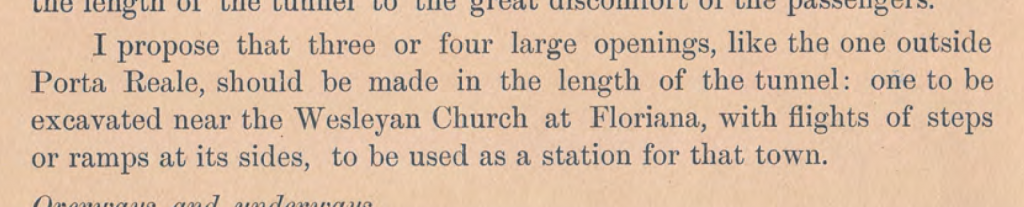
None are more tantalising than the details associated with the creation of a new station cut into the tunnel at Floriana. Although not all of Gatt’s aspirations were achieved, when compared to the excavated works and ramps threaded through the fortifications behind the Methodist church, it appears as though the new station was at least begun shortly after the report was published.
Again, the report is made available in full here, and will hopefully be a trove for anyone interested in discovering more about the railway.

No responses yet