The recent acquisition of a large batch of old photos has furnished us with some interesting new insights into the Malta railway after closure in 1931.
After services were ended in 1931, most of the railway property was divided amongst Government departments. Hamrun station, however, remained as the thriving campus for the technical school. It shared its site with a fleet of abandoned carriages and unsold locomotives, some retained for training purposes, but the majority unsold when Government sought to disperse railway assets.
Two of the new photos show the scene at Hamrun between 1935 and 1936. They were taken on two different occasions, some months apart. So, we’ll take a look at them in order.
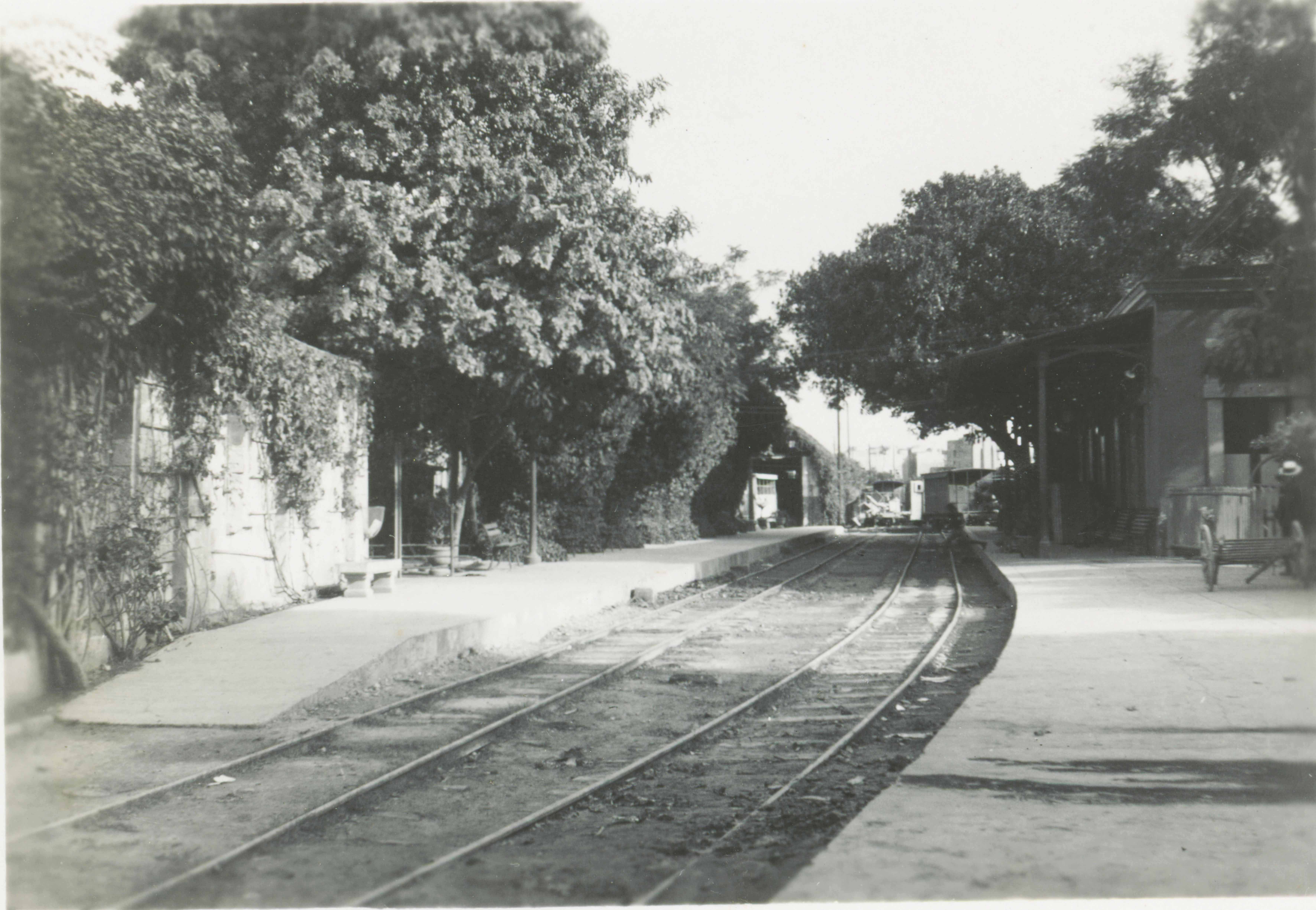
The first was taken from the station entrance, looking back along the abandoned tracks in the direction of Valletta. On the left is a rare glimpse of the side of the original engine shed; clad in trellis and planted with climbers, it’s little wonder it escaped notice from other photographers over the lifetime of the railway. In front of it the full length of the Valletta-bound platform can be seen, still replete with benches.
The station building stands on the right of the tracks. Its painted facades can be discerned against the pale stonework around the doorways. The blurred outline of a student is caught as they jump from the platform and across the tracks.
Of particular interest is the scene at the far end of the station. The disused rollingstock has been concentrated at this end of the station, away from the school and the platform gardens that were still available to the public.
Workmen’s carriages were easily recognisable by their pale grey livery, and these stand out against the darker colour of the other carriages. The curved roof of the old carriage shed is visible, the building profile much disguised by the dense coat of creeper grown up around it.
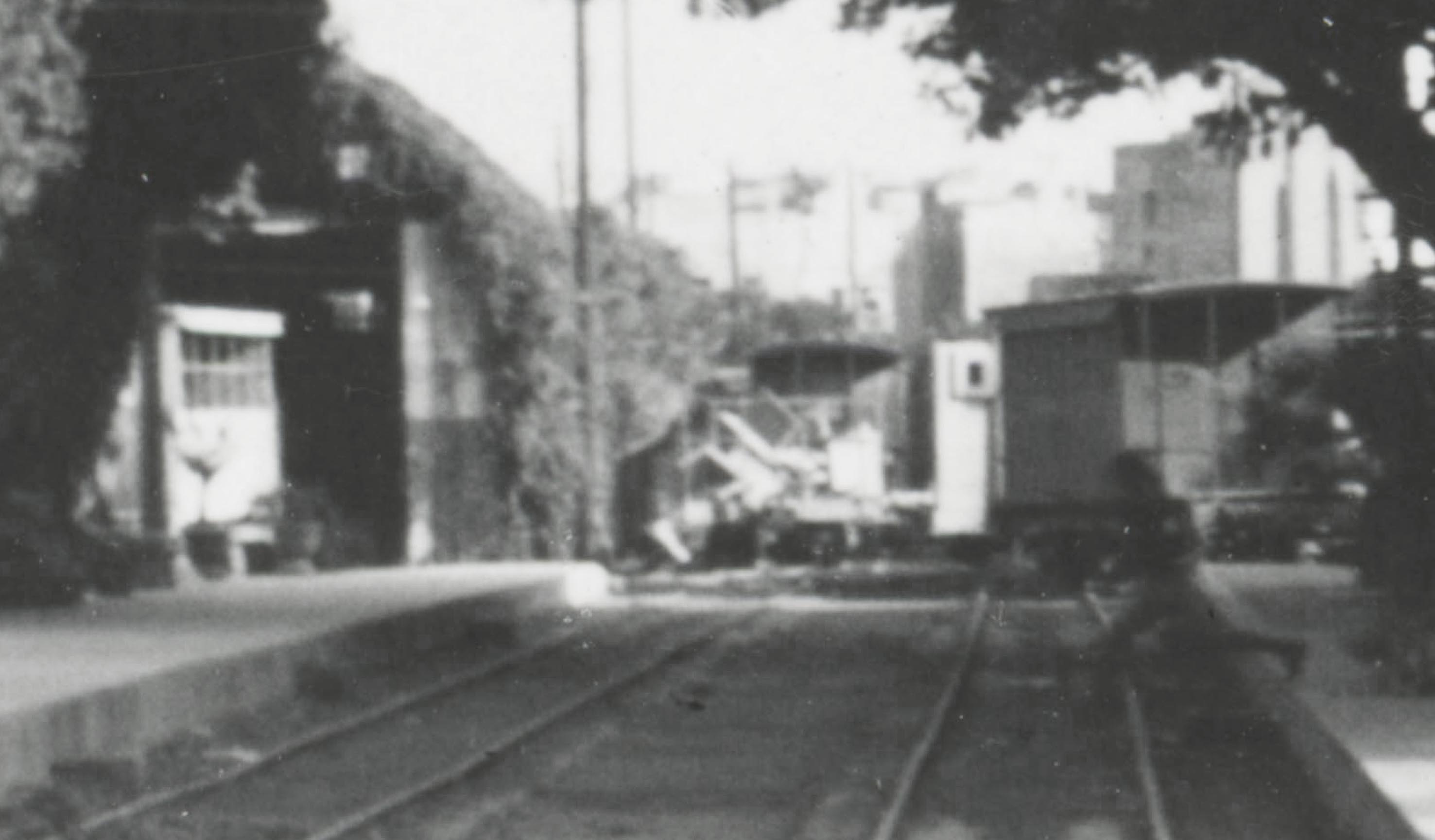
Attention is drawn to one of the carriages, nearly unrecognisable, but, from its distinctive design, one of the larger workmen’s carriages in a state of complete dereliction. The carriage has been dismantled down to its base, old bench seats being thrown onto the chassis along with other detritus. This is the first direct evidence for the destruction of rollingstock on site.
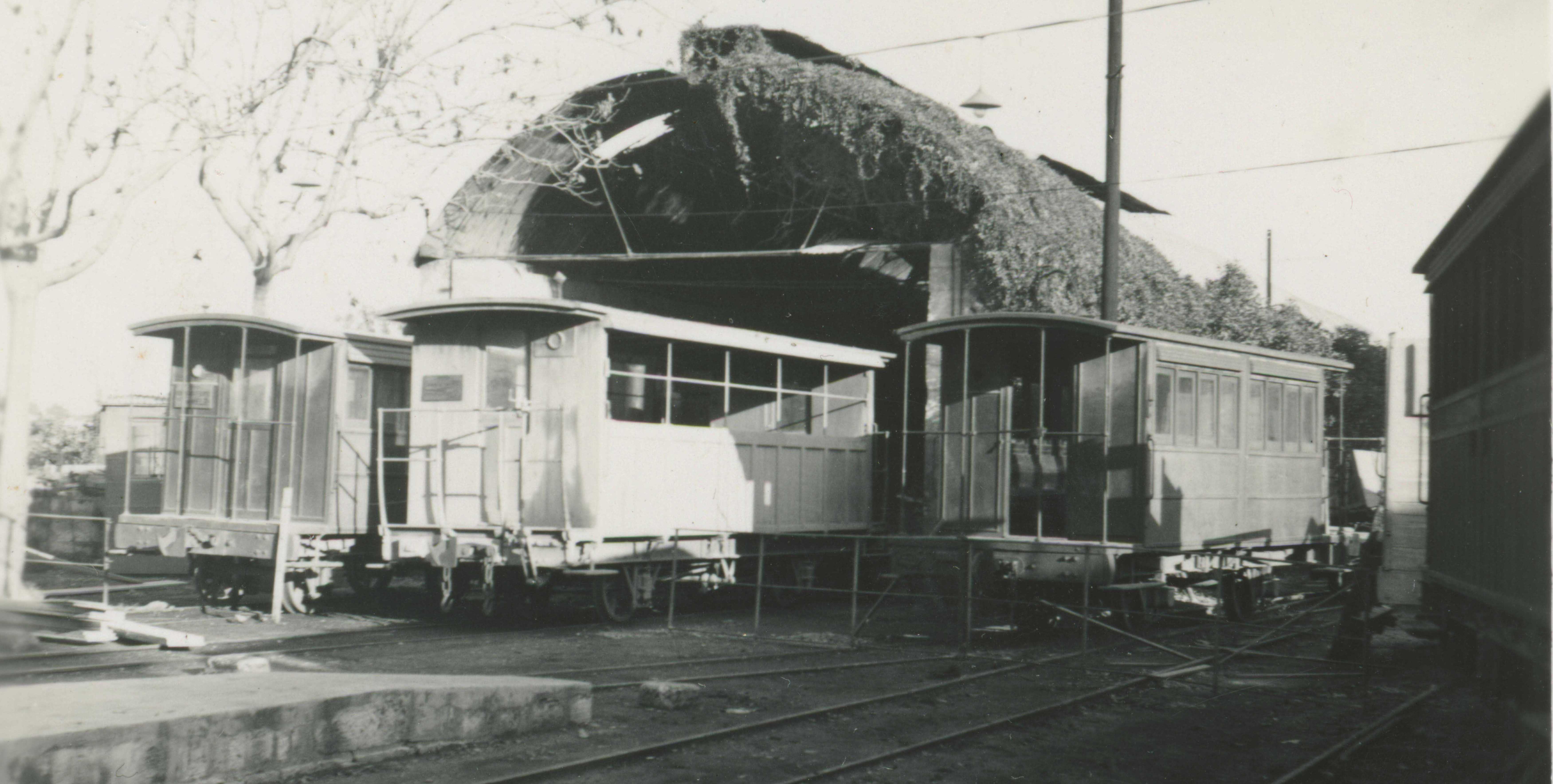
Whatever progress on demolition was made, it was slow. The second photo is taken in winter, with bare trees, and records the carriages themselves from close quarters. But things have moved; the dismantled vehicle is still there, visible through a gap between other carriages. From this angle it can be seen that the distinctive tall steel guardrails, the only standing features left on the carriage, match those of the other Workmen’s carriage in this view.
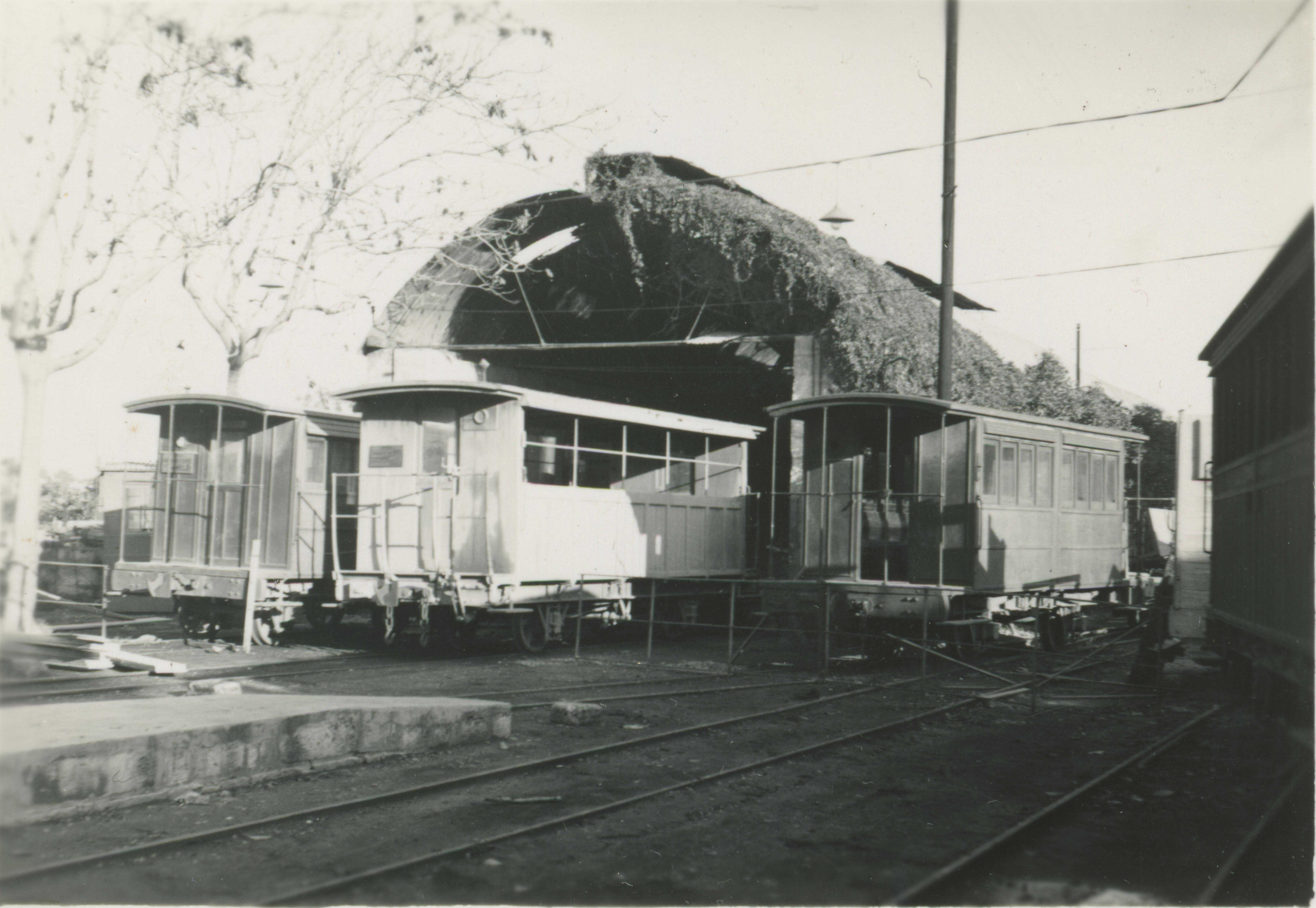
Another carriage has joined it on the old main line, perhaps the one seen in front of the shed in the earlier photo. This was perhaps moved to allow for a new fence to be erected; this can be seen installed across the tracks in front of the derelict vehicles. The reasons for this are unclear. Perhaps it was to discourage people from interfering with the old carriages, or a prelude to dividing the site up ahead of the erection of the milk factory in 1937.
The corrugated iron roof of the old carriage shed is in a lamentable state, filled with gaping holes and hardly weathertight. The largest holes appear to have been caused by the firing and preparation of the engines, the heat and smoke accelerating localised rusting above the chimneys. A bent piece of iron has been rigged-up over the adjacent road in an effort to deflect the worst effects of the smoke.
There is another curiosity worth noting: each of the carriages has had a notice added to the end of the body. For the most part, the writing is, regrettably, illegible; It may warn people off the vehicles as being dangerous, or noting their imminent destruction. Some suggestion of the plight of the carriages is hinted at by the addition of the word HELP scrawled on the sign furthest to the left.
A change of scene now, and up the abandoned line to Rabat. The photographer paused to take in the view from Saqqajja Hill and provided us with the only known photo showing Notabile station building from the street before it was altered.
Although indistinct, the open loggia frontage is obvious, its arcade subsequently infilled. It also shows that the front of the station was painted, presumably brick-red as many of the railway buildings at one time or another.
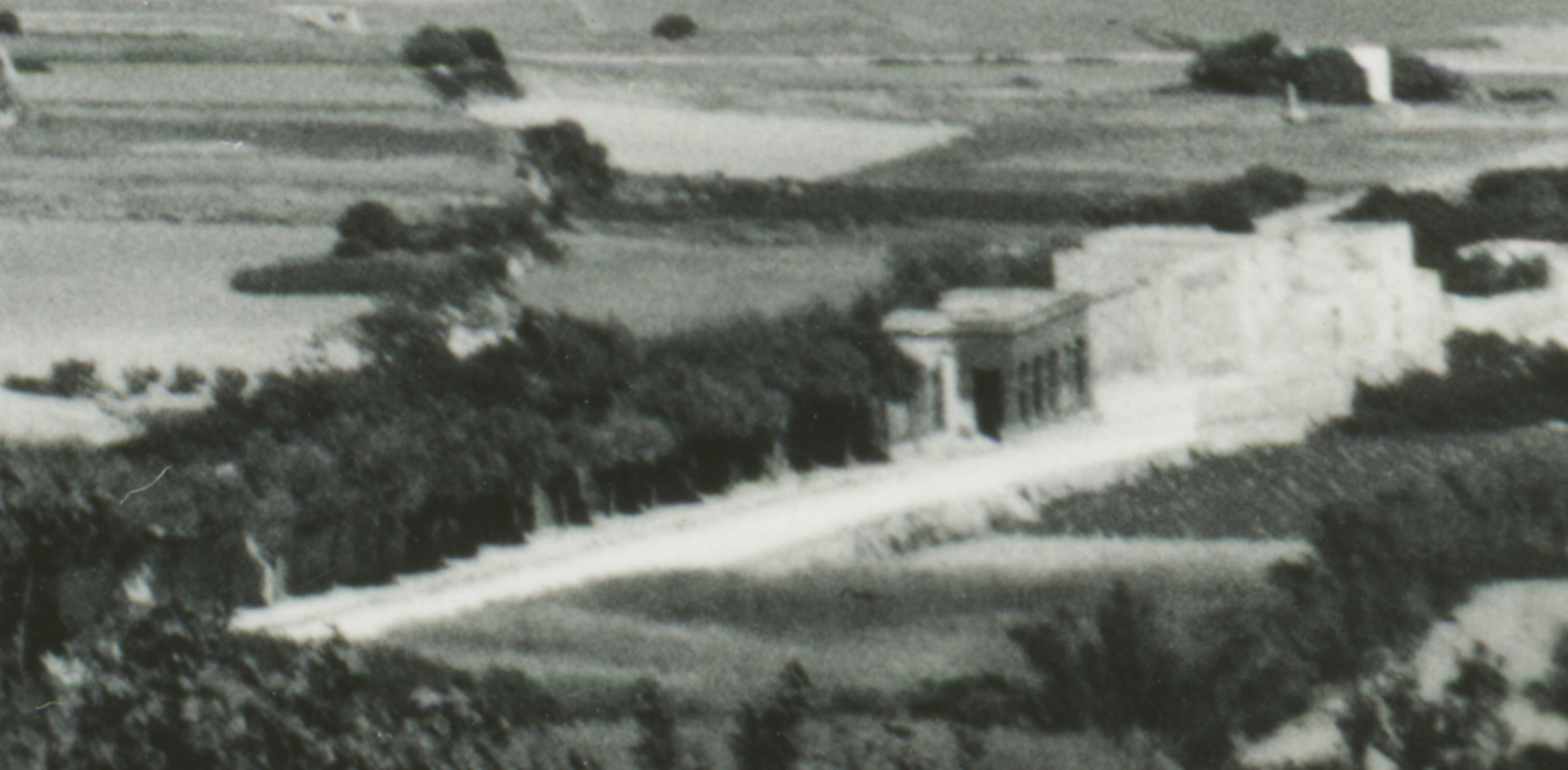
The dense line of trees lines the roadside uphill from the station, but the cabs that once waited to convey passengers uphill have long gone.
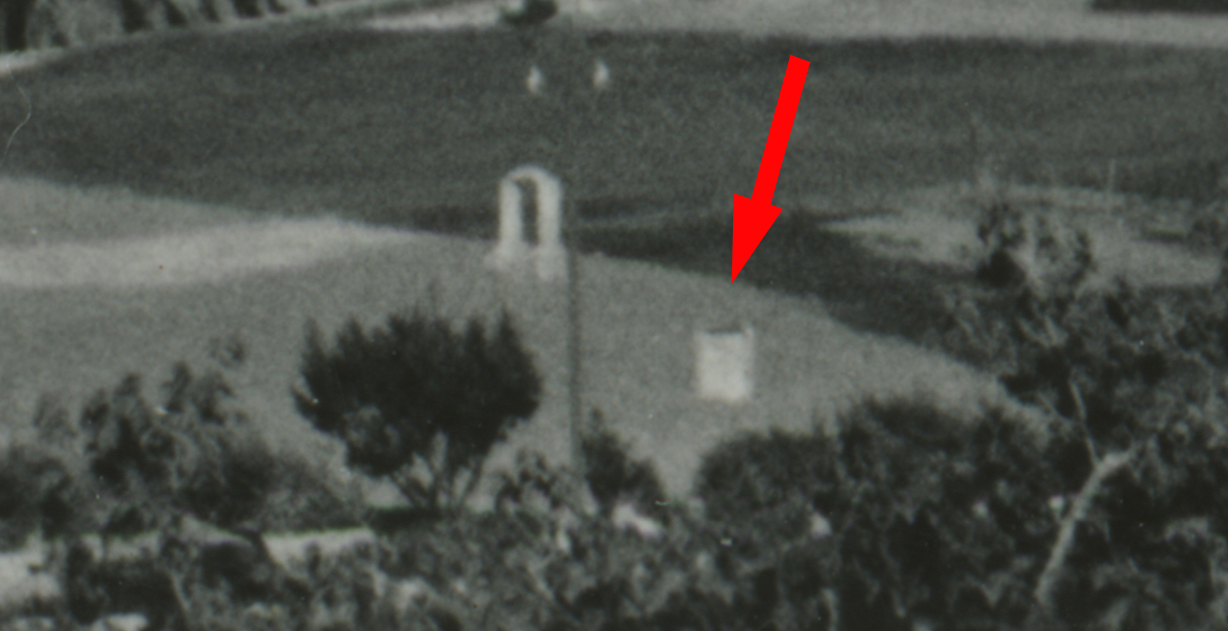
One last feature is one of the Mdina tunnel ventilation towers punctuating a field further to the left. This appears different from those seen today, open to the sky, its top section having been rebuilt during WWII to protect its use as a strategic fuel store.
Although all dating from after the railway closed, these three photos are a precious record of the railway, providing new evidence and detail to the line’s story.

No responses yet