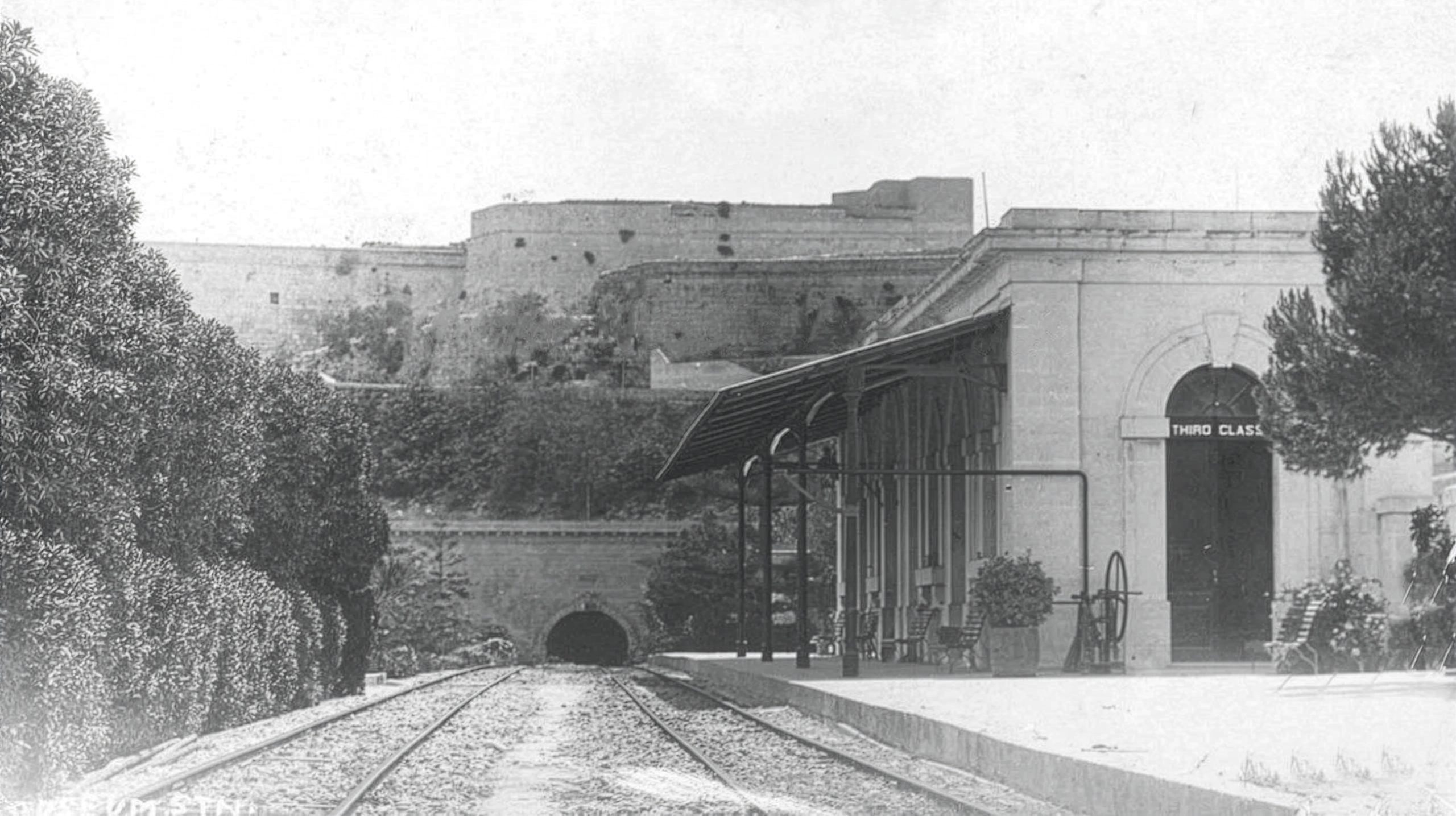
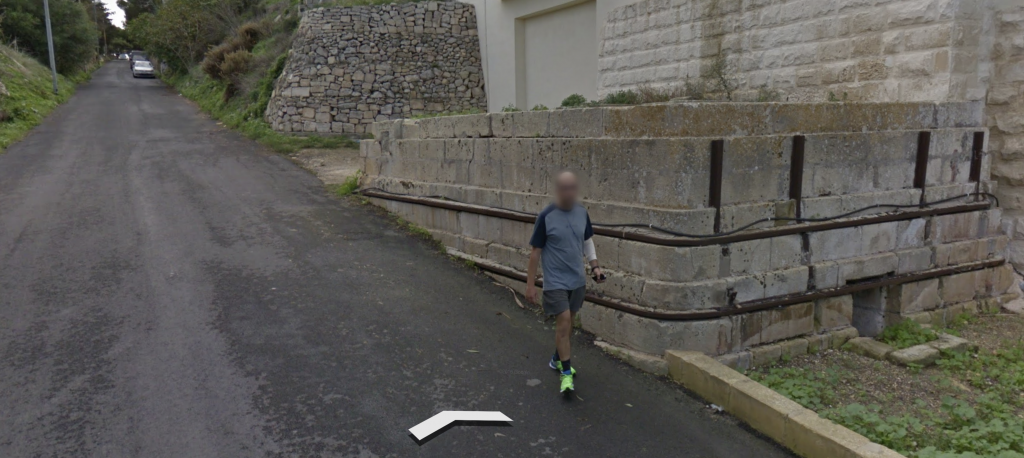
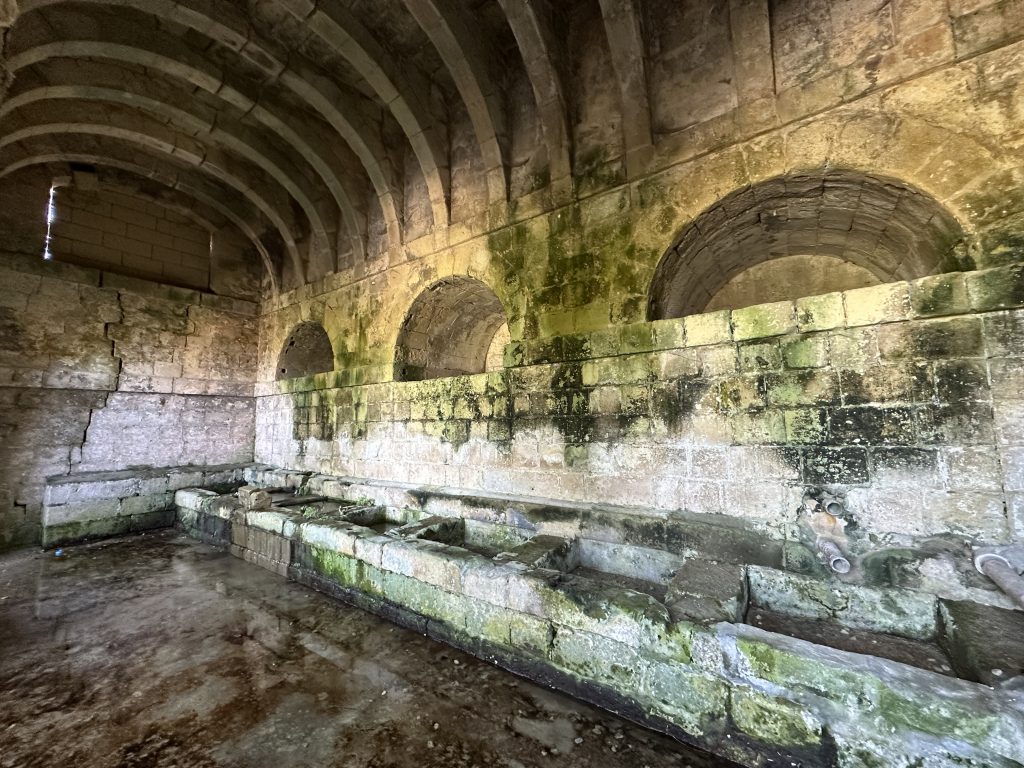
This curious contraption at the end of Museum railway station is a hand pump used to fill the tanks of the Malta Railway engines with water. There was a tank further up Triq Ghajn Hammiem that was supposed to feed the engines by gravity, so it’s unclear why an additional pump was needed. There was a ready supply of water already from the 17th Century wash house, the eponymous Ghajn Hammiem that appears to have been left untapped. Perhaps its community use or quality of the water made it inappropriate.
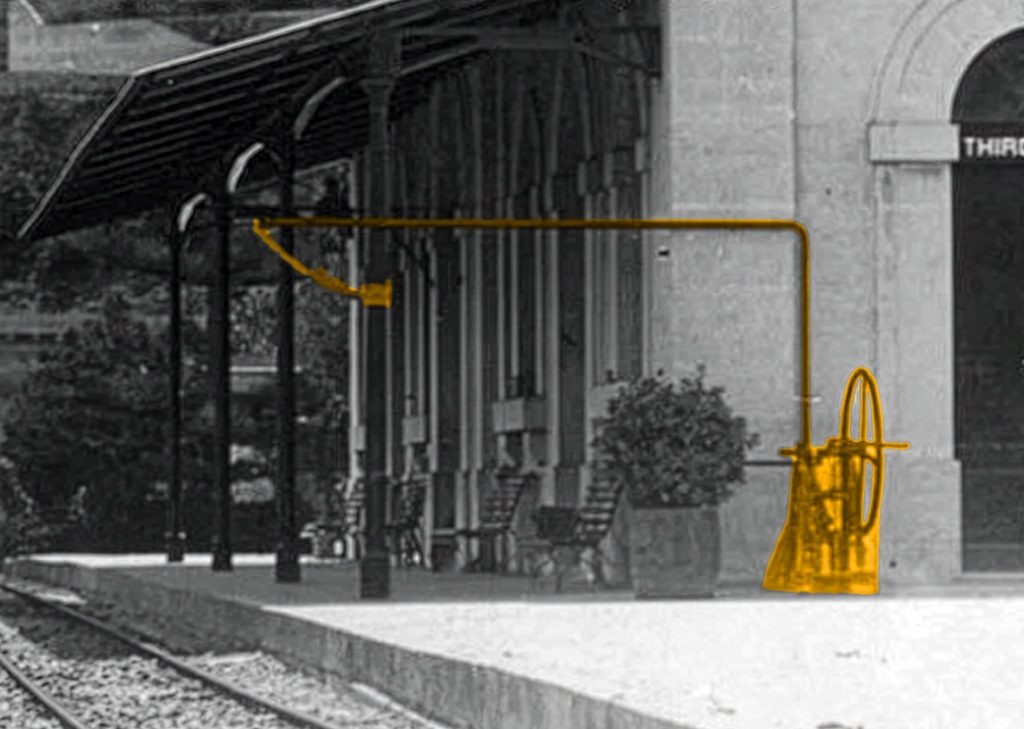
The hand-cranked pump was added to the station some time around WWI it seems, along with the iron pipe and canvas tube that funnelled the water into the locomotive tanks. In this photo it’s been wrapped up around the canopy column to prevent it from foiling the passage of trains.
Perhaps the cistern above the station lacked an adequate capacity or water source? Was that water for use only by the fountain outside the station? Did the pump elevate water from there or another cistern? And, how were engines watered before the addition of this pump?

No responses yet