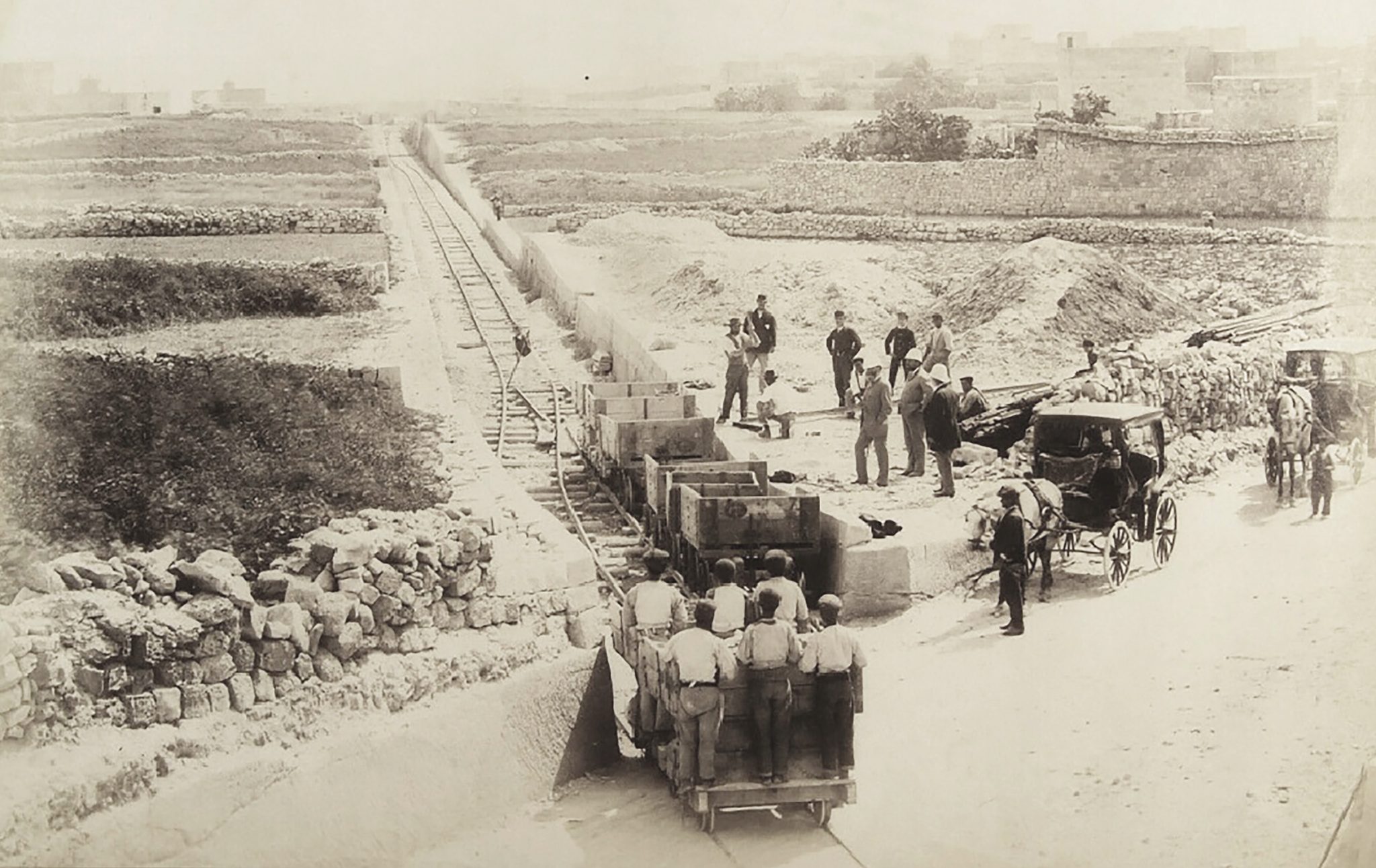
I’ve talked before about the clash between the line of the Malta Railway and the Wignacourt Aqueduct and how it was resolved by a syphon piping it under the track. The two crossed each other to the west of Attard station, in one of the deepest cuttings on the line.
Having had the opportunity to inspect one of the original photos at the National Archaeology museum, a new and curious detail has emerged. The main photo shown here is from a published source, but the detail is from the museum’s version.
Way off in the distance, in a photo taken looking towards Attard from the Mosta Road during construction in April 1882, there are TWO bridges in evidence.
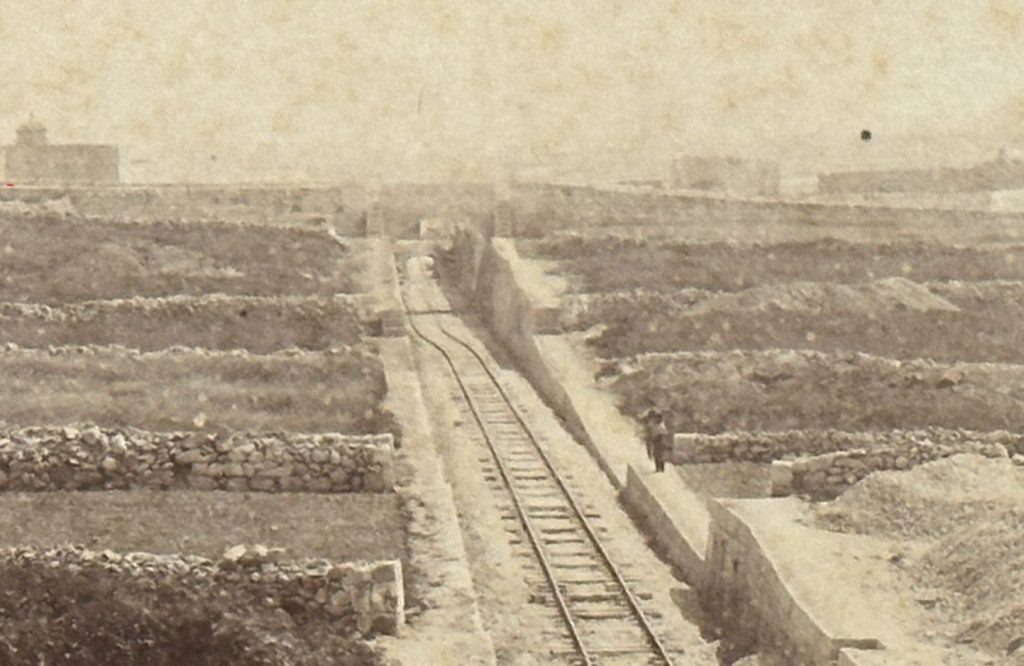
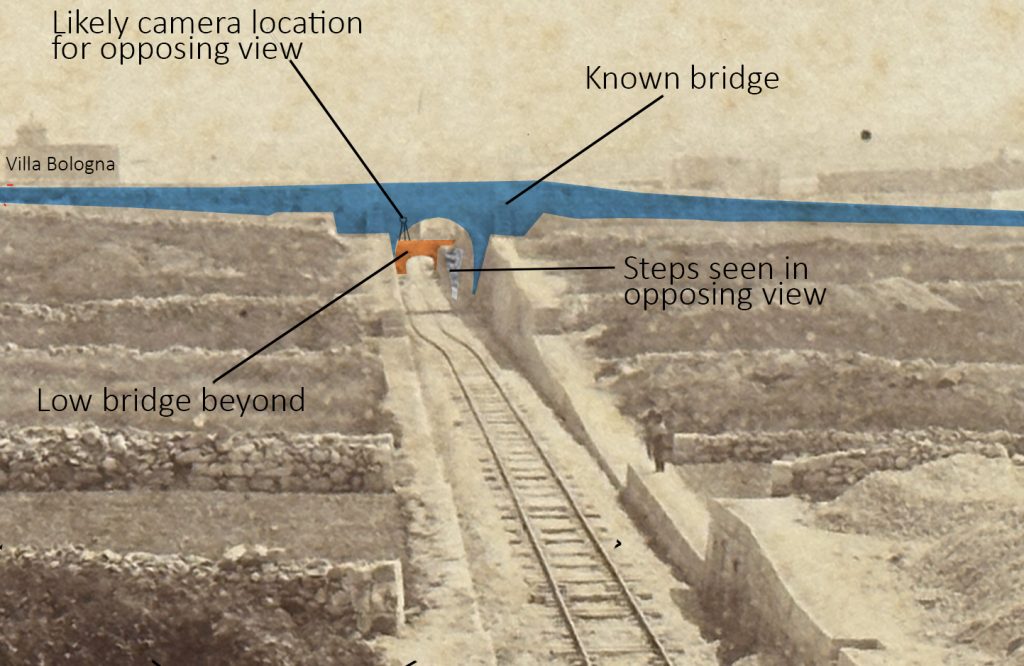
The nearest is recognisable as the much-photographed bridge across the cutting, but there is another beyond it.
That this isn’t just a figment of my imagination or artefact in the photograph is supported by more evidence. The photo looking in the opposite direction showing a workman’s wagon and the bridge is taken from an odd height angle, levitating between track level and the top of the cutting. The photographer appears to be standing on this second, lower, structure.
It seems that this low bridge is a temporary aqueduct, with the original diagonal course and gradient of the Wignacourt line uninterrupted.
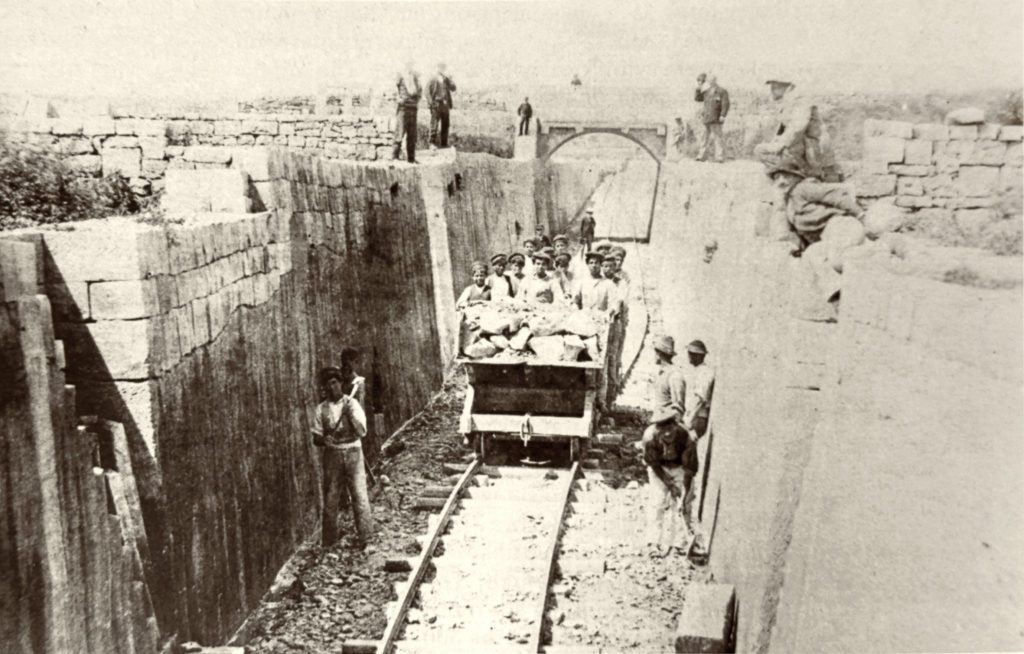
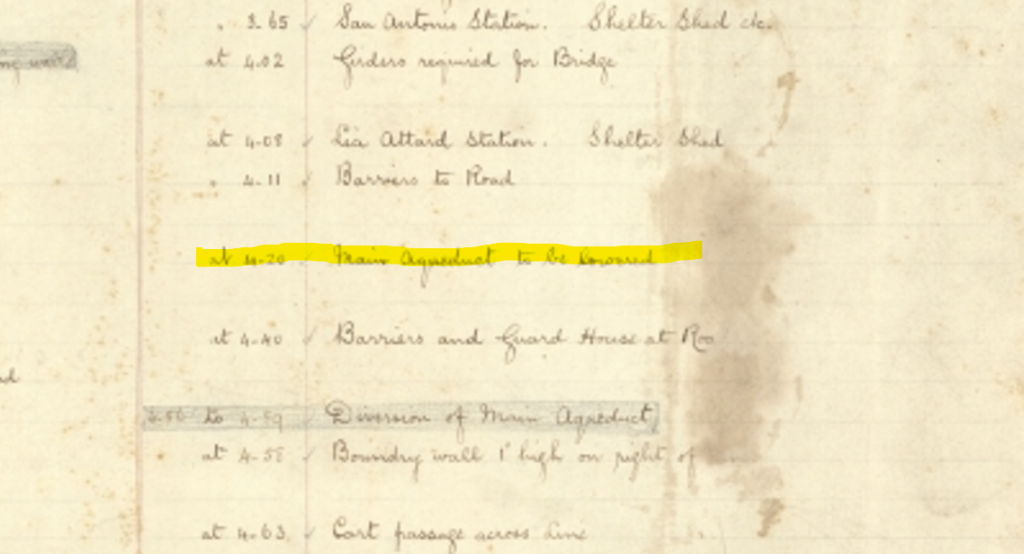
Two months later, in June 1882, a list of unfinished works along the length of the railway was drawn up. For the location of the bridges it notes: “main aqueduct to be lowered”, which would correspond with the implementation of the piped system.
How or whether, the contractor’s wagons could pass beneath the aqueduct until it was removed is less clear.
The list includes two other locations where the aqueduct is described as to be diverted, but these works are unknown.

No responses yet